
By Raj Mistry
There are many small things in daily life that irritate us.
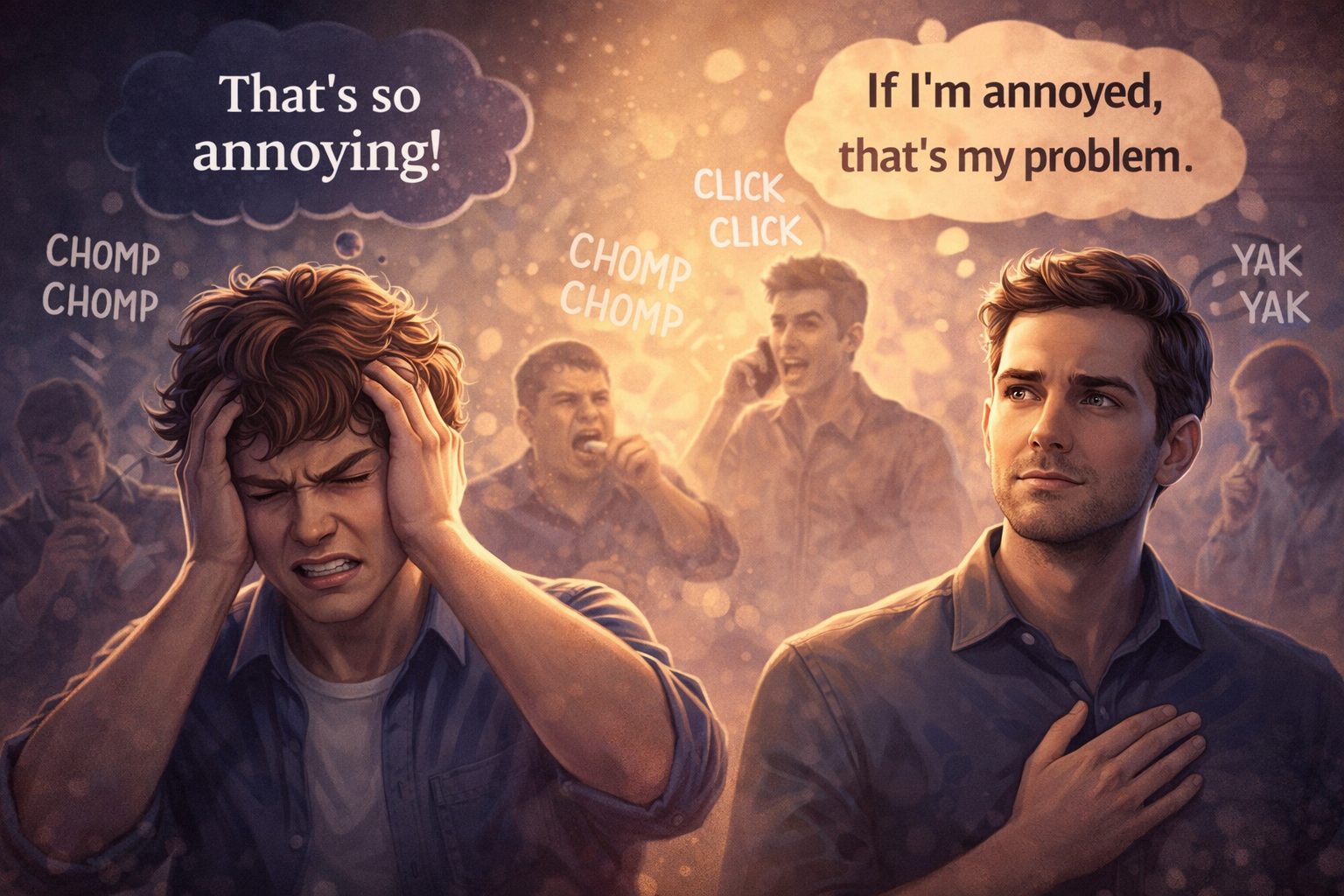
Someone chewing loudly.
Talking too loudly on the phone.
Breathing heavily.
Picking their nose in public.
Some behaviors instantly make us uncomfortable.
They feel wrong, annoying, or even disgusting to witness.
Naturally, we feel like correcting them.
We might say, “Don’t do that,” or “That’s irritating.”
But here’s the truth:
That’s their choice — not ours.
Chewing quietly may be a good habit, but it cannot be forced on someone who doesn’t see a problem with it.
When It’s Not About Them
When someone’s behavior irritates you, it’s easy to believe that they are the problem.
But if you look closely, something shifts.
They are simply being themselves.
You are the one feeling disturbed.
So the real question becomes:
Who has the problem?
If a person is chewing loudly and doesn’t care, they are at peace.
You are the one getting irritated.
Which means the discomfort exists within you — not them.
The Smarter Response
Instead of trying to change people, change your position.
If something is bothering you:
• Eat before or after them
• Move to another seat
• Step away from the situation
Not out of weakness — but out of awareness.
Because forcing people to change rarely works.
And even if it does, it often creates friction, resentment, or unnecessary conflict.
Walking away protects your peace without damaging relationships.
When Irritation Runs Deeper
Sometimes, the reaction isn’t just mild irritation.
For some people, specific sounds like chewing, slurping, or pen-clicking trigger intense emotional responses.
This is known as misophonia — a condition where certain sounds can cause anger, anxiety, or discomfort.
In such cases, it’s not about attitude — it’s about how the brain is wired.
Understanding this changes perspective.
It reminds us that while the trigger may not be our fault,
our response is still our responsibility.
Your Peace, Your Responsibility
The moment you accept that people won’t behave according to your preferences, something shifts.
You stop expecting the world to adjust for you.
Instead, you start managing your own reactions.
Because in reality:
It’s not their chewing or talking that ruins your peace.
It’s your decision to stay and react to it.
Final Thought
The next time something irritates you, pause and ask:
What is the real problem?
If it’s them — you can’t control it.
If it’s your reaction — you can.
And that’s where your power lies.