
By Raj Mistry
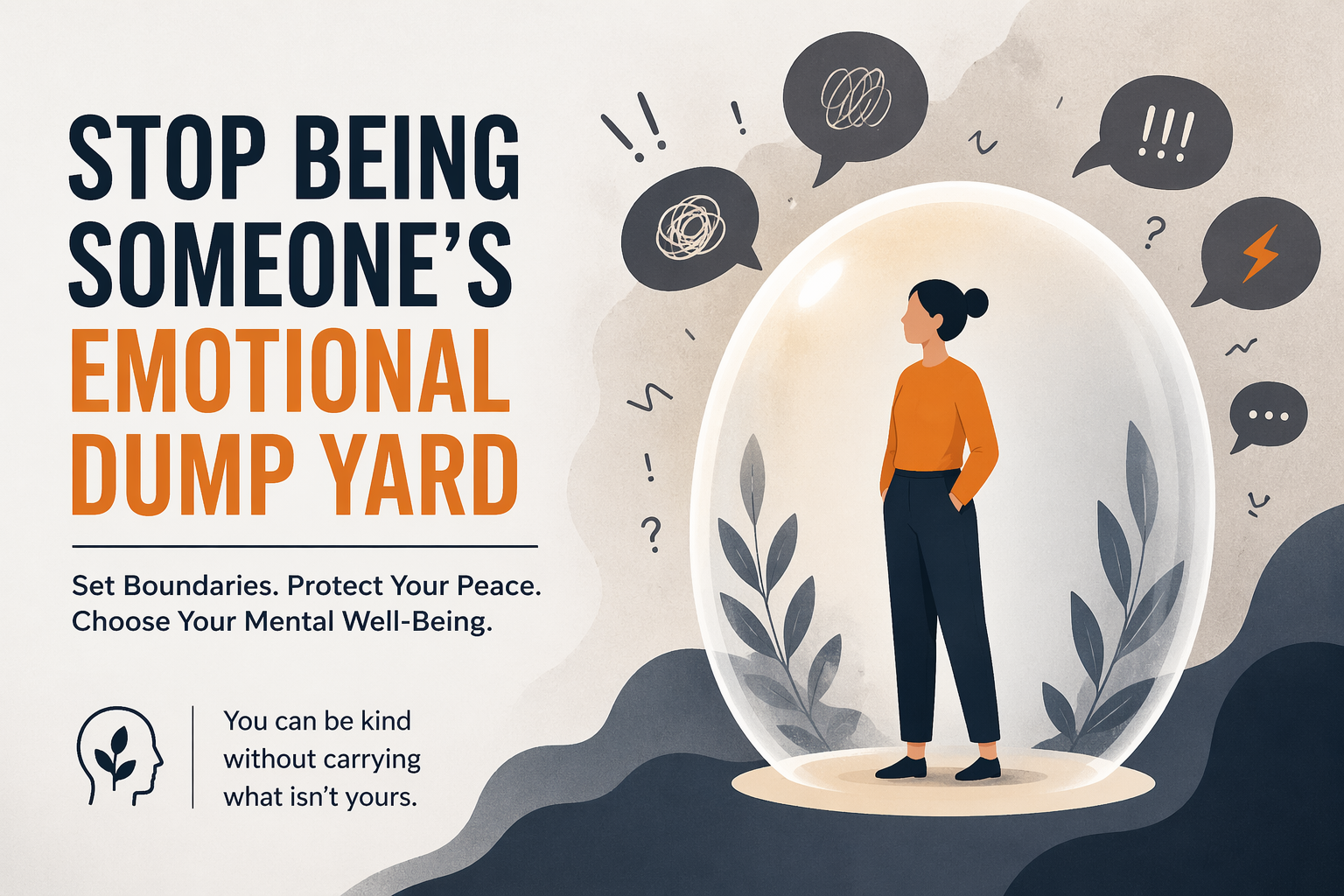
There is a difference between being a good listener and becoming an emotional dump yard. Listening is an act of kindness. But being someone’s emotional trash bin is an act of self-neglect.
People go through difficult phases, and sometimes they just need to speak, release, and feel heard. That is normal, healthy, and necessary. As a friend, it’s okay to offer your time and presence when someone genuinely wants clarity, healing, or support. But the problem begins when listening turns into absorbing—when you’re no longer supporting, but carrying.
Attention vs. Healing
Not everyone who shares their pain is trying to heal.
Some people repeat the same emotional story again and again, not to move forward, but to feel temporarily lighter. They offload their emotions onto you, walk away relieved, and return with the same story later. No matter how many solutions you offer or how clearly you guide them, nothing changes—because they are not looking for solutions. They are looking for an audience.
And the more you listen, the more they return—not because you helped them grow, but because you helped them avoid growing.
What It Does to You
When you constantly absorb unresolved emotions from others, something begins to shift inside you.
You start feeling drained, heavy, and mentally cluttered. Your energy drops. Your thoughts become filled with problems that were never yours to carry. Over time, their emotional state starts influencing your mindset.
Your inner world reflects what you repeatedly allow into it.
If your mind is a temple, then you are responsible for what enters it. Not everyone deserves that level of access.
The Importance of Boundaries
Being a good listener is a strength.
But being used as an emotional dumping ground is self-destruction.
Once you start observing carefully, patterns become clear. You’ll begin to recognize who is seeking genuine support—and who is simply seeking attention. And the moment you recognize that you’re being used, you need to draw a boundary.
Not with anger. With clarity.
You can say: “I’m here for you, but if you’re not willing to work on the solution, I can’t keep listening to the same problem on repeat.”
That is not rude. That is responsible.
Protecting Your Mental Space
You are not responsible for carrying what others refuse to resolve.
If someone truly needs help, there are professionals—counselors, therapists—who are equipped to guide them. Your role is not to become their emotional landfill.
Protecting your mental space is not selfish—it is necessary.
Practices like gratitude, silence, journaling, breathwork, and mindful self-talk help you rebuild and protect your inner world. When your mind is clear, your energy becomes lighter, your thinking becomes sharper, and your life becomes calmer.
Final Thought
You can be empathetic without being exploited. You can be kind without being consumed.
Boundaries don’t make you rude.
They make you healthy.