
By Raj Mistry
There was a time when our choices felt personal. We travelled because we were curious, bought things because we genuinely liked them, and discovered places through conversations, accidents, and exploration. Today, many of those decisions begin somewhere else—not in our minds, but on our screens.
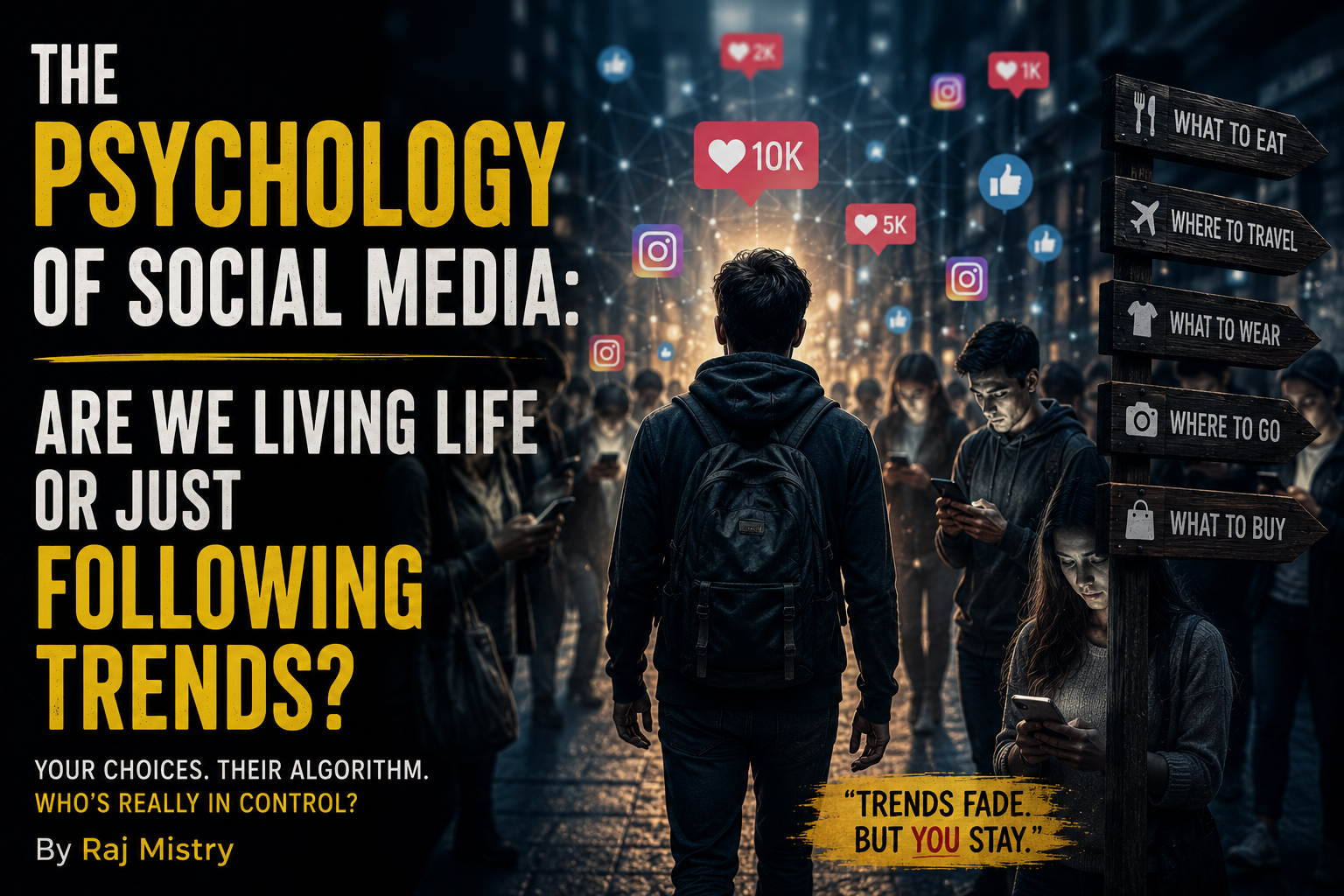
Social media has quietly become one of the most powerful forces shaping modern life. It influences what we wear, where we travel, what we eat, which products we buy, and even how we present ourselves to the world. It doesn’t simply reflect culture anymore; it actively creates it.
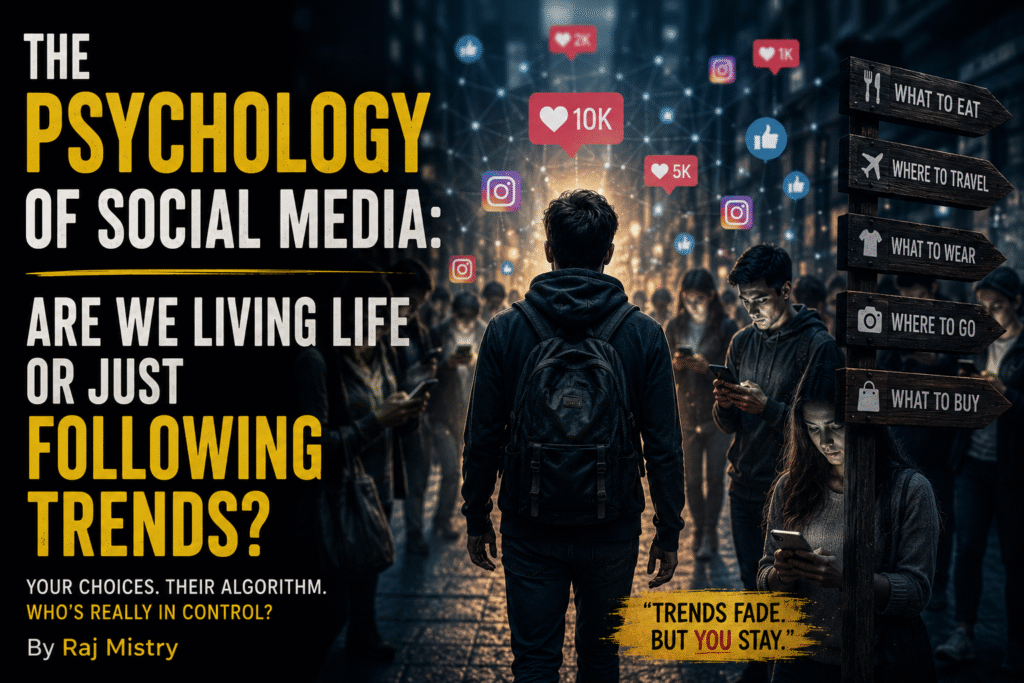
The worrying part is that this influence rarely feels like influence. It feels like choice. We believe we are making independent decisions, when in reality many of them have already been suggested, repeated, and reinforced thousands of times before we ever act on them.
When Trends Replace Personal Taste
Fashion has always changed over time, but social media has accelerated that process beyond recognition. A particular style becomes popular online, and within weeks millions of people begin dressing the same way. Restaurants become famous overnight, cafés develop long waiting lists, and holiday destinations suddenly appear on everyone’s bucket list.
None of this is necessarily wrong. Trends have always existed. The difference today is the speed at which they spread and the pressure they create. Instead of asking ourselves whether we actually enjoy something, we often ask whether it is trending.
Gradually, personal taste begins to disappear. Clothes are chosen because they photograph well. Food is ordered because it looks good in a reel. Hotels are booked because someone online recommended them. Our preferences become less about what genuinely brings us joy and more about fitting into an invisible cultural script.
Travelling Has Become Following
Travel was once about discovery. People wandered through unfamiliar streets, asked locals for recommendations, stumbled upon hidden cafés, and found beautiful places by accident. Every journey carried the possibility of surprise.
Today, many trips begin with a search bar.
“Top 10 places to visit.”
“Most Instagrammable café.”
“Hidden gems you must see.”
Ironically, once those “hidden gems” appear online, they stop being hidden. Quiet beaches become crowded, peaceful temples fill with selfie sticks, and small local businesses are replaced by places designed purely for viral attention.
Instead of allowing a city to introduce itself, we often arrive with a checklist already prepared by someone else. We no longer explore a destination—we recreate someone else’s experience of it.
Why We Follow the Crowd
Psychologists use the term social proof to describe our tendency to copy what other people are doing, especially when we are uncertain. If thousands of people appear to want something, our brain assumes there must be a good reason.
This explains why products that existed quietly for years can suddenly become global sensations. Stanley tumblers, Labubu collectibles, viral cafés, and countless other products didn’t necessarily become better overnight. What changed was visibility.
The more often we see something, the more familiar it becomes. Familiarity creates comfort, comfort creates trust, and trust makes us more willing to buy. Repeated exposure slowly transforms curiosity into desire without us even noticing.
We like to believe we are following our preferences, but many of our preferences are gradually shaped by repeated exposure.
Influencers Don’t Just Recommend Products—They Shape Desire
Influencers are no longer simply entertainers. They have become one of the most powerful marketing channels in the world.
Every product placement, travel vlog, restaurant review, skincare routine, and “must-have” recommendation teaches us something about what is supposedly worth wanting. Sometimes those recommendations are genuine. Sometimes they are sponsored. Often, the audience cannot easily distinguish between the two.
The business model is remarkably effective because it doesn’t sell products directly. It sells aspiration.
We don’t just want the coffee. We want the lifestyle attached to the coffee. We don’t simply buy a hotel stay—we buy the image of ourselves staying there. Companies understand that emotions are often easier to sell than products, and influencers have become experts at creating those emotions.
Algorithms Are Quietly Shaping Our Identity
One of the biggest changes brought by social media is that algorithms now influence what we notice every day. They learn our interests, predict what will hold our attention, and continuously feed us similar content.
Over time, this repeated exposure begins influencing our decisions in subtle ways. The destinations we dream about, the hobbies we pursue, the clothes we wear, and even the opinions we hold can gradually reflect what the algorithm believes will keep us engaged.
This influence is powerful precisely because it feels invisible. We rarely notice ourselves changing. We simply assume that the ideas appearing repeatedly in our feed are naturally our own.
The Business of Going Viral
Building a successful business has never been easy, but social media has changed the rules. Today, a decent product combined with effective storytelling can outperform a superior product with poor visibility.
A single viral reel can introduce a business to millions of people within days. Restaurants become fully booked after one influencer’s recommendation. Small brands suddenly struggle to meet demand because a product happened to capture the internet’s attention.
This doesn’t mean quality no longer matters. In the long run, poor products rarely keep loyal customers. But social media has made visibility almost as valuable as quality. People often discover products because they are popular before deciding whether they are actually good.
Taking Back Our Choices
Social media itself is not the problem. It has made learning easier, connected people across the world, helped small businesses grow, and inspired countless creative ideas.
The challenge begins when we stop questioning what we see.
Not every trending product deserves your money. Not every viral destination deserves your time. Not every influencer recommendation deserves your trust. Sometimes the most memorable experiences are the ones you discover yourself, without an algorithm deciding where you should go next.
Perhaps the greatest act of independence today is surprisingly simple: making choices because they genuinely matter to you, not because they happen to be trending.
Travel without trying to recreate someone else’s photographs.
Wear clothes because you enjoy them.
Try restaurants because they interest you.
Allow yourself to experience the unexpected again.
Because in a world increasingly shaped by algorithms, originality has become one of the rarest forms of freedom.