
By Raj Mistry
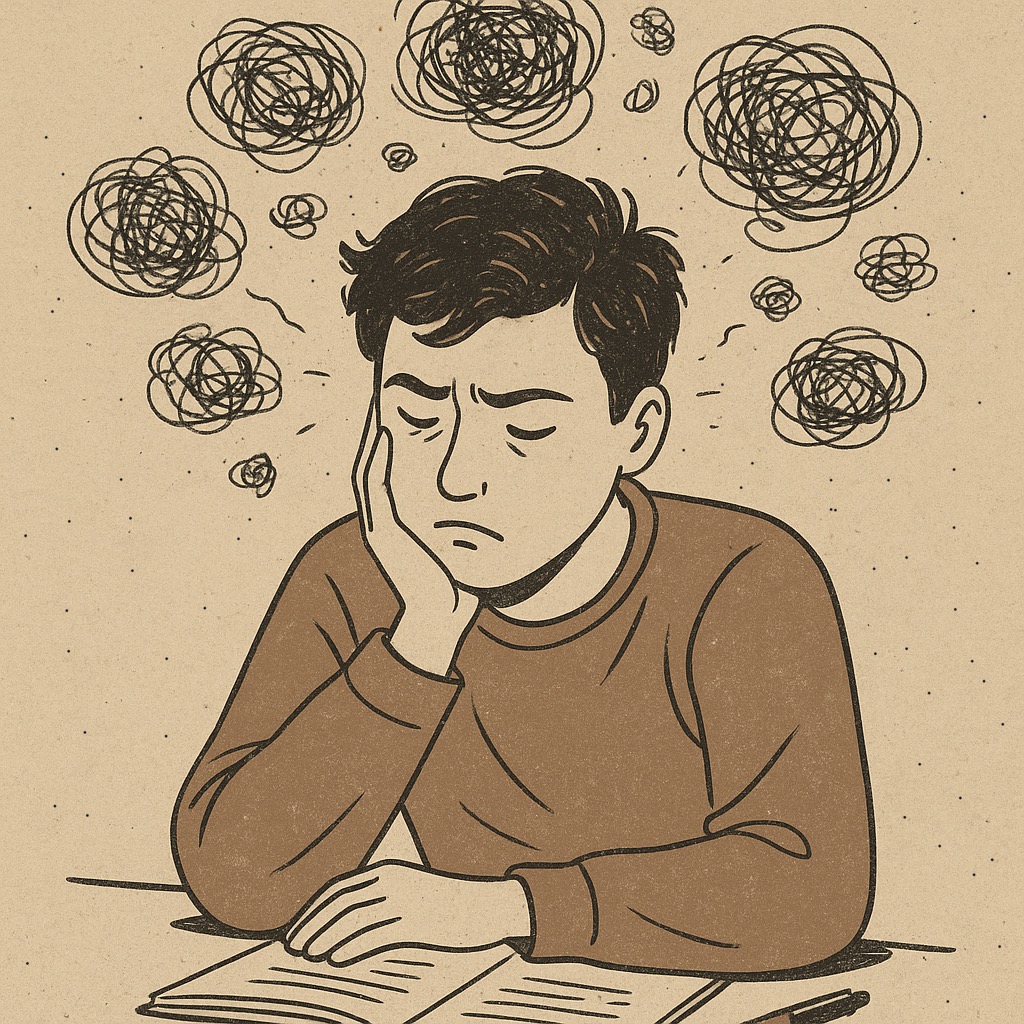
Most people feel insecure about themselves. They live with those insecurities for so long that they eventually begin to see themselves through them—and, sometimes, other people start seeing them the same way.
Someone thinks their complexion isn’t good enough. Someone thinks they aren’t rich enough. Someone feels they aren’t smart enough, talented enough, attractive enough, confident enough, or outgoing enough. Another person thinks they are too thin, too fat, too introverted, or too extroverted.
There is almost always something that feels “not enough.”
We spend years believing that if we could just fix one particular thing about ourselves, we would finally feel comfortable. If I lose weight. If I make more money. If I become more attractive. If I become successful. If people like me more.
But even when that one thing changes, the mind often finds something else to worry about.
It is like carrying an invisible checklist of flaws. You cross one thing off, and another appears.
When Insecurity Becomes a Business
Our insecurities are not only personal problems. They are also incredibly profitable.
Marketing understands this better than most of us do. It identifies what people already feel insecure about and then offers a product as the solution.
If you’re worried about your weight, there is a product promising to change it. If you’re worried about your appearance, there is something promising to make you more attractive. If you’re worried about your height, intelligence, skin, hair, or fitness, someone is ready to sell you an answer.
The product doesn’t always create the insecurity. Often, it simply finds an insecurity that already exists and makes it louder.
When you genuinely believe that you are enough, these messages become easier to question. You can still choose to improve yourself, but you no longer feel that you have to become someone else to deserve respect.
There is a huge difference between self-improvement and self-rejection.
You can want to become better without believing that the person you are today is worthless.
How Low Self-Worth Changes the Way You Live
Low self-worth doesn’t always look like someone constantly saying, “I hate myself.” Sometimes it is much quieter.
It can look like accepting poor treatment because you don’t believe you deserve better. It can look like constantly apologizing, avoiding attention, refusing opportunities, or assuming that other people are more capable than you.
And sometimes, even compliments become uncomfortable.
Someone tells you that you look good, that you did a great job, or that they admire something about you—and instead of accepting it, you immediately reject it.
“No, it’s nothing.”
“You’re just being nice.”
“I’m not that good.”
Why is it so difficult to accept something positive about ourselves when we desperately want to hear it?
Because if your internal image of yourself says “I am not good enough,” praise can feel inconsistent with that identity.
You want validation, but when validation finally arrives, you don’t know how to accept it.
When Success Doesn’t Feel Like It Belongs to You
This is where impostor feelings can appear.
Imagine someone who has spent years believing they are average, incapable, or undeserving. Suddenly, they get the promotion they wanted. They succeed at something difficult. People start praising their work.
Instead of feeling completely comfortable with the success, they may wonder whether they simply got lucky or whether everyone will eventually discover that they aren’t actually as capable as they think.
The problem isn’t necessarily the achievement.
The problem is that the achievement doesn’t match the identity they have built inside themselves.
This can begin early in life. A child who constantly hears that their achievements are never enough may eventually stop seeing success as evidence of ability. They begin seeing it as something temporary, accidental, or undeserved.
That inner story can follow them into adulthood.
Your Mind Learns the Story You Repeat
The way you speak to yourself matters.
If you constantly tell yourself that you’re stupid, unattractive, incapable, unlucky, or inferior, those thoughts can influence how you behave. You become more hesitant to take opportunities, more afraid of failure, and more likely to interpret setbacks as confirmation that your negative beliefs were correct.
The opposite is also possible.
This doesn’t mean simply repeating “I am amazing” will magically transform your life. Your mind isn’t a machine that accepts every positive statement as fact.
Real change requires something deeper: changing the way you interpret yourself and then giving yourself evidence that the new belief can be trusted.
If you believe you cannot speak confidently, speak anyway. If you believe you cannot learn something, start learning. If you believe you don’t deserve an opportunity, take one.
Confidence becomes stronger when your actions repeatedly contradict the story that held you back.
Your Environment Matters More Than You Think
You don’t build your mindset in isolation.
The people around you, the conversations you hear, the content you consume, and the environment you live in all influence how you see yourself.
If you’re constantly surrounded by people who criticize you, compare you, mock your ambitions, or make you feel small, maintaining confidence becomes much harder.
That doesn’t mean you should remove everyone who disagrees with you. Sometimes honest criticism is exactly what helps us grow. But there is a difference between someone challenging you and someone repeatedly making you feel worthless.
Sometimes improving your life requires improving the environment around you.
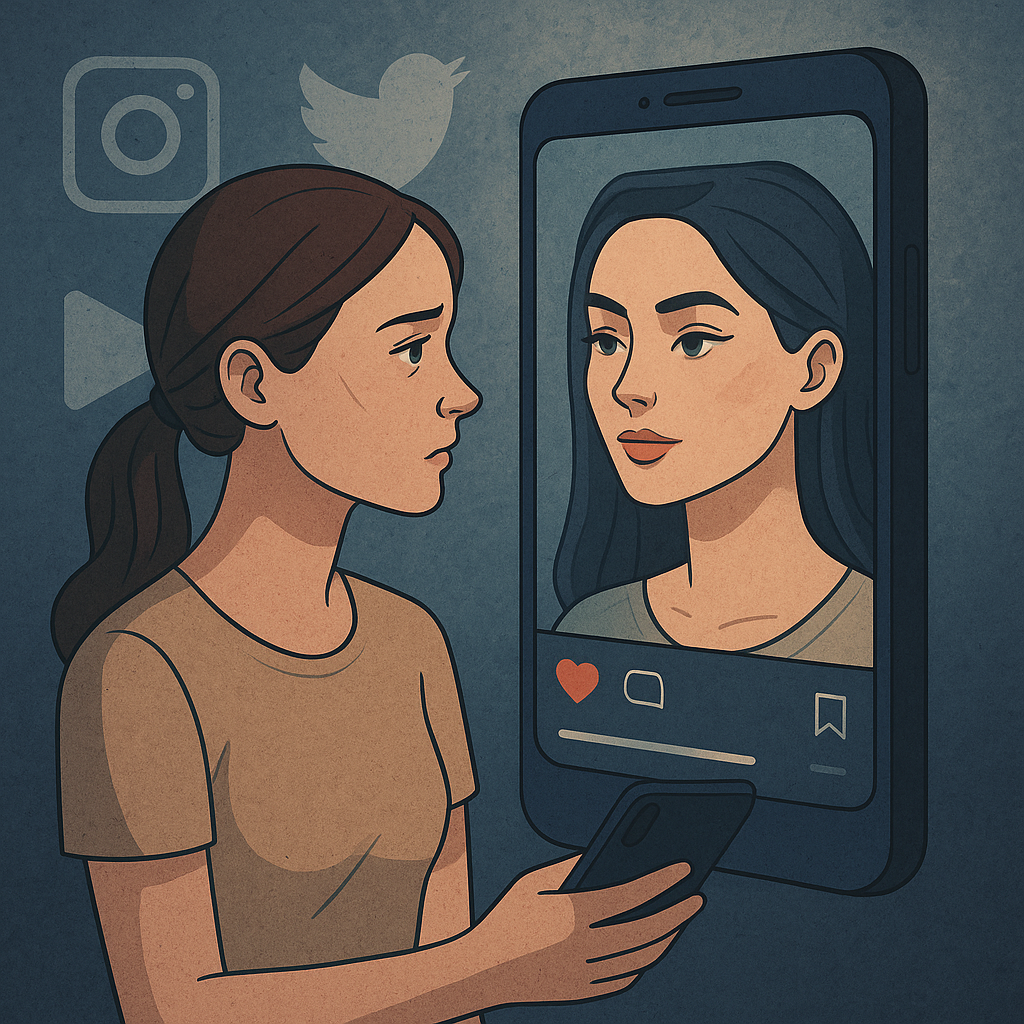
You may have to spend less time with people who drain your confidence. You may have to change what you consume every day. You may have to stop comparing your life to carefully edited versions of someone else’s.
And sometimes, you simply have to give yourself permission to become someone different from the person others expect you to be.
You Don’t Have to Be Perfect to Be Enough
Being enough doesn’t mean you have nothing left to improve.
You can be enough today and still want to become better tomorrow.
You can accept your appearance and still work on your health. You can accept your current financial situation while working toward financial freedom. You can acknowledge your weaknesses while developing your strengths.
Growth doesn’t require hatred of who you currently are.
In fact, some of the healthiest growth begins when you stop treating yourself like a problem that needs to be fixed.
You don’t need to become the most attractive person in the room. You don’t need the highest salary. You don’t need the most followers, the best body, the biggest house, or everyone’s approval.
You need to stop using other people’s standards as the measuring scale for your existence.
Final Thought
One day, you may lose money.
You may lose a job, status, popularity, possessions, or even the appearance you once thought defined you.
But if you have built a strong sense of self-worth, losing those things doesn’t mean losing yourself.
You can rebuild.
The person who knows their worth can start again.
The person who depends entirely on external validation can have everything and still feel like they have nothing.
So stop waiting for the world to give you permission to feel worthy.
Improve yourself. Learn. Grow. Change. Become stronger.
But don’t do it because you hate the person you are now.
Do it because you believe that person is worth investing in.
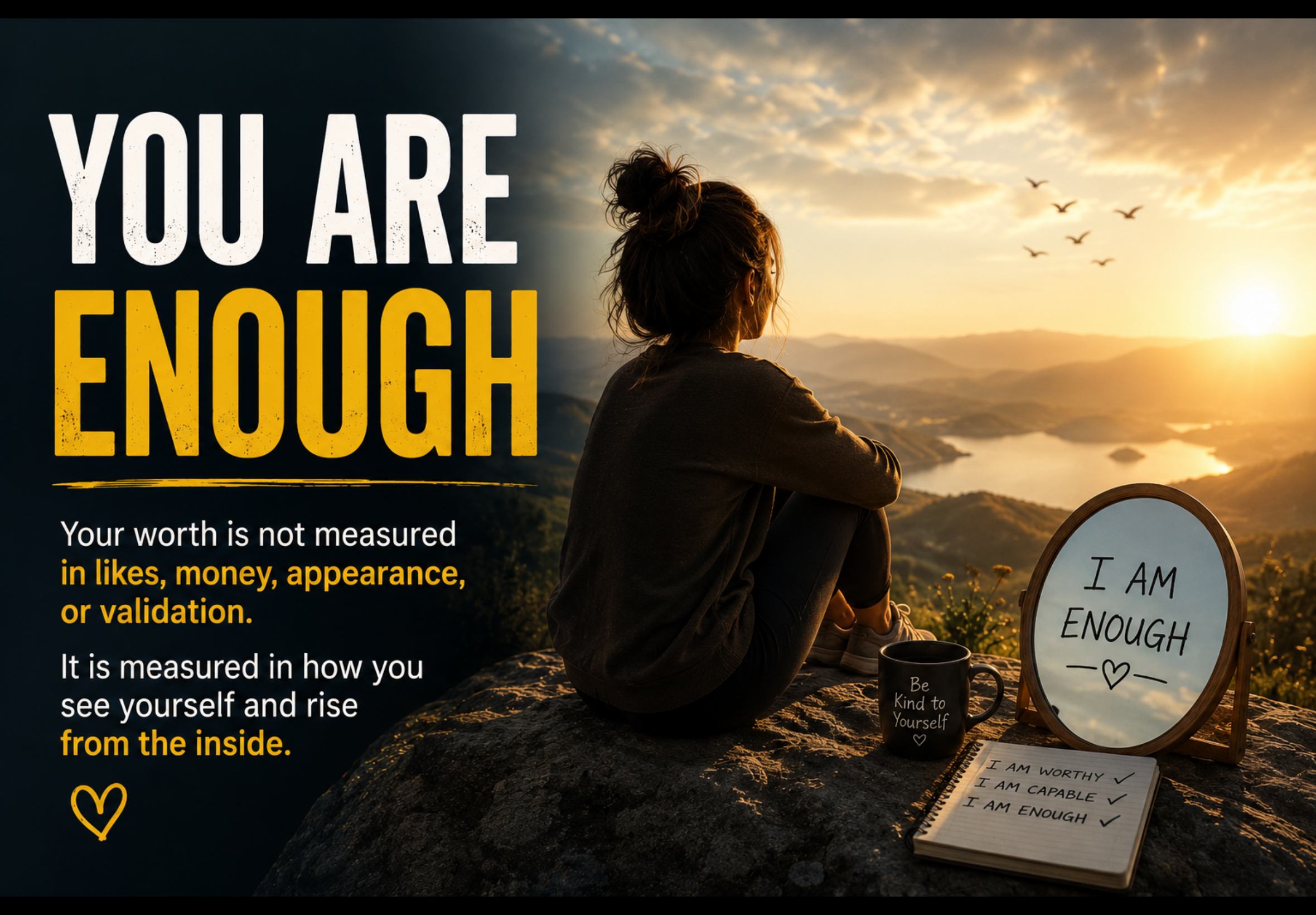
You are enough.
You always were.
You just forgot somewhere along the way.