
By Raj Mistry
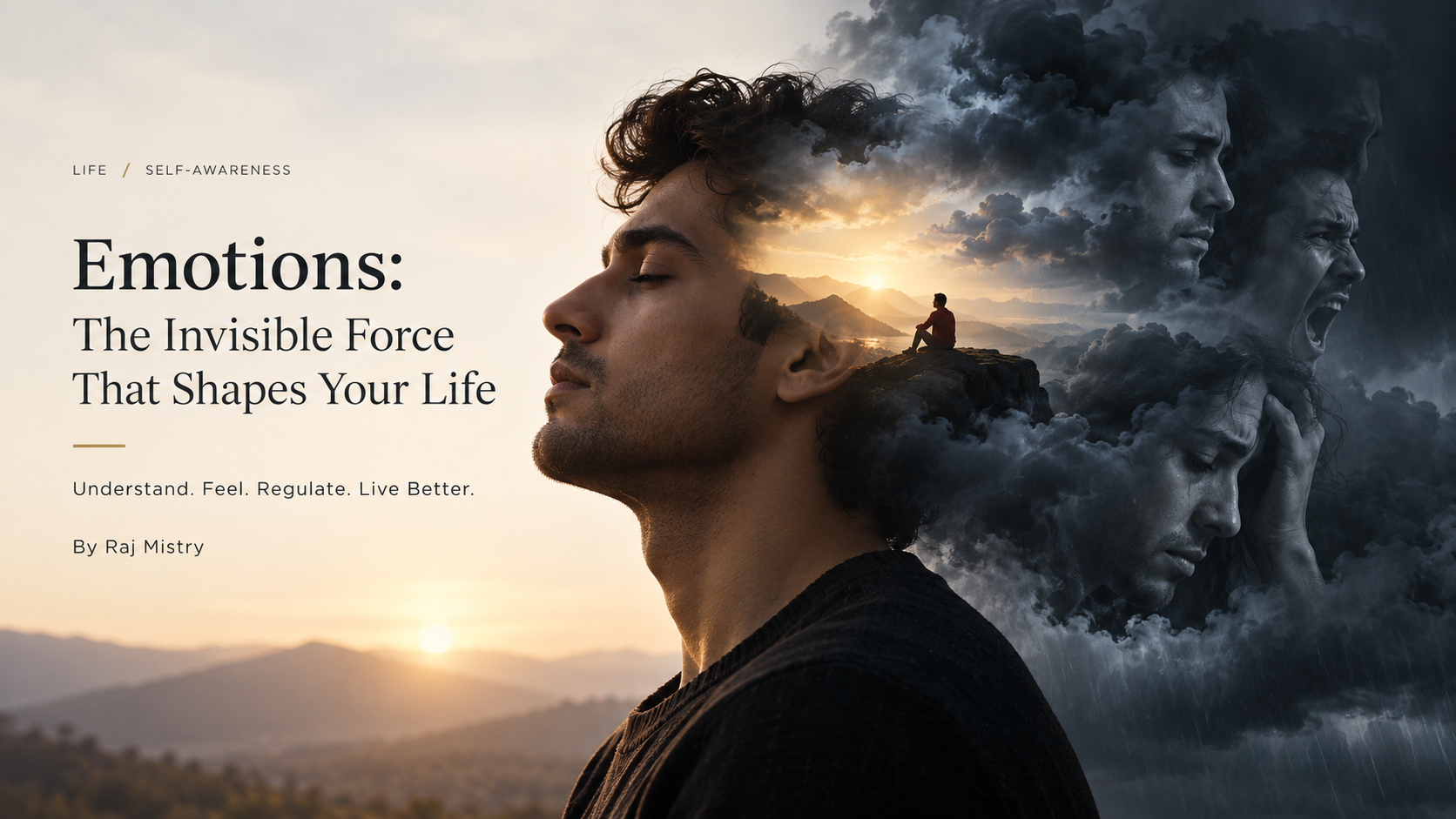
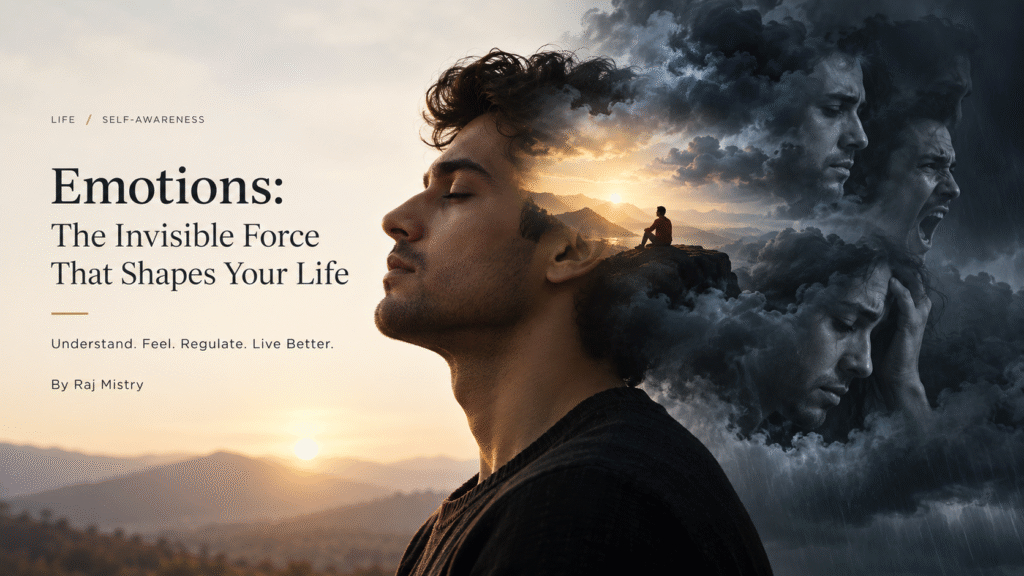
Emotions play a far more important role in our lives than we usually acknowledge. Without emotions, a person would be no different from someone in a coma — alive, but not truly living. Emotions give meaning to experiences. They shape our decisions, reactions, relationships, and even our sense of purpose.
But emotions are a double-edged sword. The same emotions that can help you rise can also pull you down. If regulated, emotions become your strength. If left unchecked, they can push you into impulsive decisions, regret, broken relationships, and even life-altering mistakes.
The quality of your life depends largely on how well you understand and regulate your emotions.
⸻
Why Emotional Pain Feels Worse Than Physical Pain
Physical pain heals with time. Emotional pain often doesn’t.
You can recover from an injury, but emotional wounds can stay buried for years, quietly influencing your behavior. The intensity of pain you feel often depends on your emotional state, not just the physical damage.
For example, people feel far less pain during a fight than during an accident, even if the injury is similar. Why? Because emotions like adrenaline, fear, or anger temporarily override pain signals. On the other hand, strong emotions can also create physical pain — anxiety can cause chest pressure, headaches, nausea, or fatigue without any physical injury at all.
This shows one thing clearly: emotions directly affect the body.
⸻
How Emotions Drive Human Behavior
Almost everything humans do is emotionally driven.
Adventure, joy, ambition, love, aggression, fear, suicide, creativity — all of these originate from emotions. Even things like the effectiveness of medicine or the enjoyment of a movie depend on your emotional state. A comedy feels dull when you’re sad. A placebo works only if you believe it will.
We’ve all heard stories of extraordinary emotional strength — a mother lifting a car to save her child, or an elderly person performing an act far beyond their physical ability. These aren’t miracles. These are emotions unlocking hidden reserves of strength.
Emotions are not limited to happiness or sadness. They are complex, layered, and powerful forces shaping human behavior.
⸻
The Danger of Unregulated Emotions
While emotions can empower us, unregulated emotions can be dangerous.
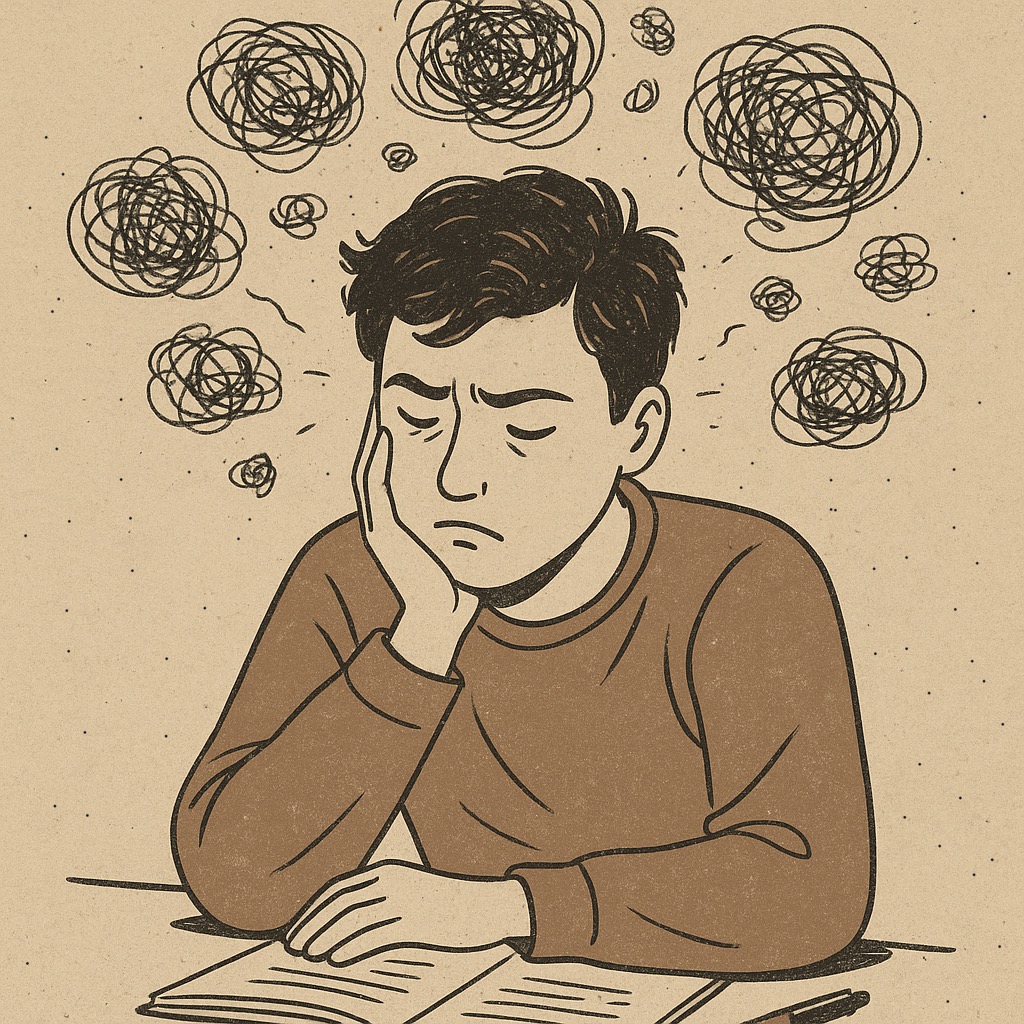
Academic pressure has pushed students to suicide — not because they failed, but because of the fear of failing. Breakups destroy people not because a relationship ended, but because one person was emotionally over-attached while the other wasn’t.
When emotions take control, logic disappears. Decisions made in extreme emotional states often lead to regret. Impulse purchases, violent reactions, reckless driving, harmful words — most are emotional decisions, not rational ones.This is why emotional regulation matters more than emotional intensity.
Emotions Should Be Felt, Not Avoided
Emotions are not the enemy. Avoiding them is.
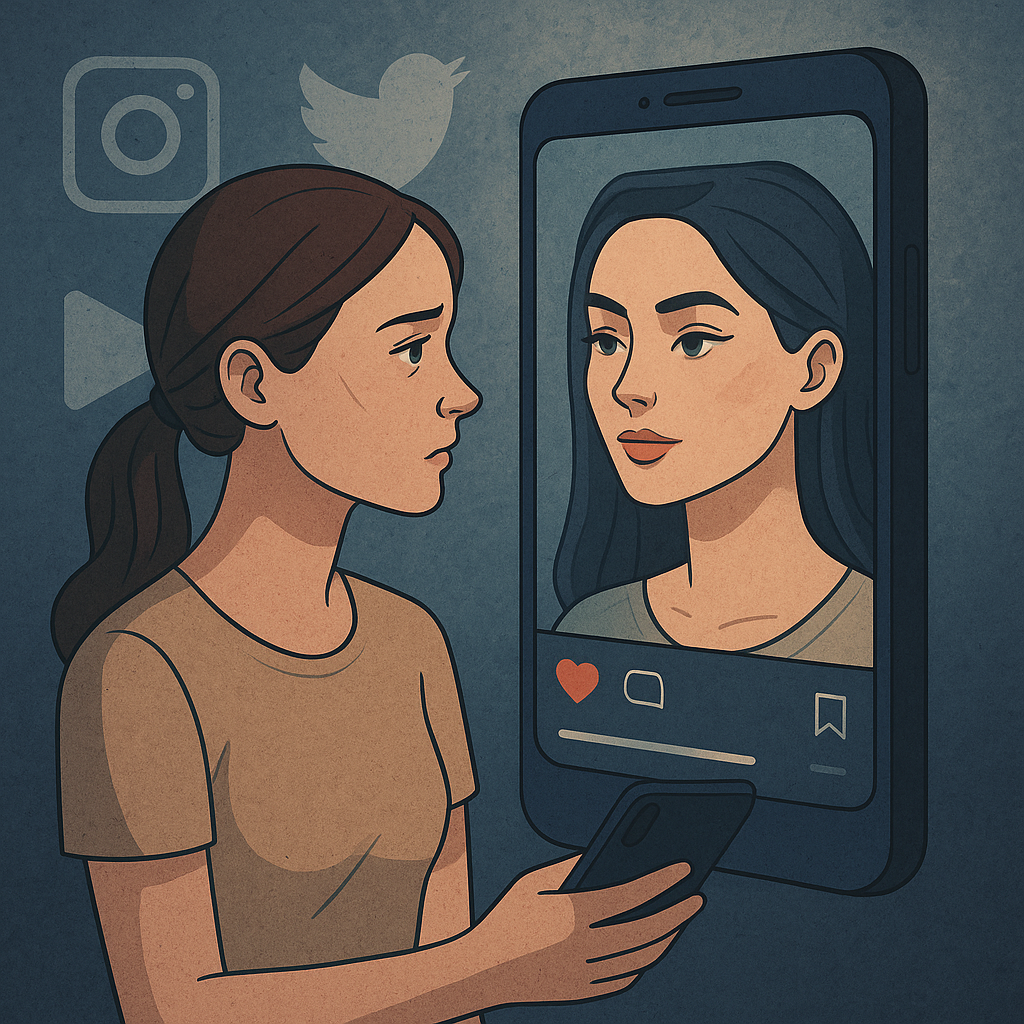
Many people try to escape emotions through alcohol, drugs, social media, constant entertainment, or distraction. Instead of feeling sadness, fear, or anger, we numb ourselves. But avoided emotions don’t disappear — they wait.
The same applies to childhood. Parents, often with good intentions, try to protect children from discomfort. They stop them from facing fear, pain, or disappointment. But emotions that are never felt are never understood. A child who never experiences emotional discomfort grows into an adult who doesn’t know how to handle it.
Too much pampering creates emotional fragility. Overprotection steals emotional resilience.
⸻
Your Environment Shapes Your Emotions
What you consume shapes how you feel.
The music you listen to, the content you watch, the people you surround yourself with — all influence your emotional state. Constant exposure to negative content can make you feel helpless or pessimistic. Positive environments can create confidence, motivation, and calmness.
This is why mindset isn’t accidental — it’s built.
If you constantly feel unlucky, you’ll behave like someone who expects failure. If you feel confident, your body language changes, your decisions improve, and opportunities open up. Emotions influence behavior, and behavior reinforces emotions.
⸻
Suppression Is Not Regulation
One of the biggest misunderstandings about emotions is confusing suppression with regulation.
• Suppression means ignoring or burying emotions.
• Regulation means feeling emotions without letting them control your actions.
Suppressed emotions don’t disappear — they accumulate. Over time, they explode as anger, anxiety, depression, or emotional numbness. Suppression creates emotional time bombs.
Regulation, on the other hand, allows you to feel emotions, understand them, and respond consciously rather than react impulsively.
⸻
How Emotions Are Formed
Emotions are internal responses to external events — filtered through your perception.
Two people can experience the same failure and feel completely different emotions. One may feel motivated, another may panic. Why? Because emotions are shaped by past experiences, beliefs, upbringing, and thought patterns.
A student raised by supportive parents may see failure as feedback. Another raised by fear-based parenting may see failure as disaster. The situation is the same — the emotional response is not.
This proves that emotions are not independent events; they are connected to thoughts and interpretation.
⸻
Emotional Awareness Is the First Step
You cannot regulate what you are not aware of.
Awareness doesn’t mean control overnight. It means noticing your emotional reactions even when you fail to manage them. Awareness slows impulsive behavior. It creates a gap between feeling and acting.
Simple practices like pausing before responding, taking deep breaths, or changing body posture can significantly reduce emotional intensity. Your body and emotions influence each other — calming one helps calm the other.
⸻
Emotional Intelligence vs Emotional Maturity
Understanding emotions is emotional intelligence. Acting responsibly despite emotions is emotional maturity.
Many people understand their emotions but still act destructively. Maturity comes from practice, not knowledge. It requires effort, patience, and repetition.
Most regrets in life don’t come from logical decisions — they come from emotional ones made without reflection.
⸻
Final Thought
Emotions are not your fault — but managing them is your responsibility.
No one else can regulate your emotions for you. When handled well, emotions become your compass. When ignored, they become your prison.
Emotions are like a car. You can drive them toward your destination — or let them drive you off a cliff.
The choice is always yours.