
By Raj Mistry
Losing Abilities: How Technology Is Rewiring the Human Mind
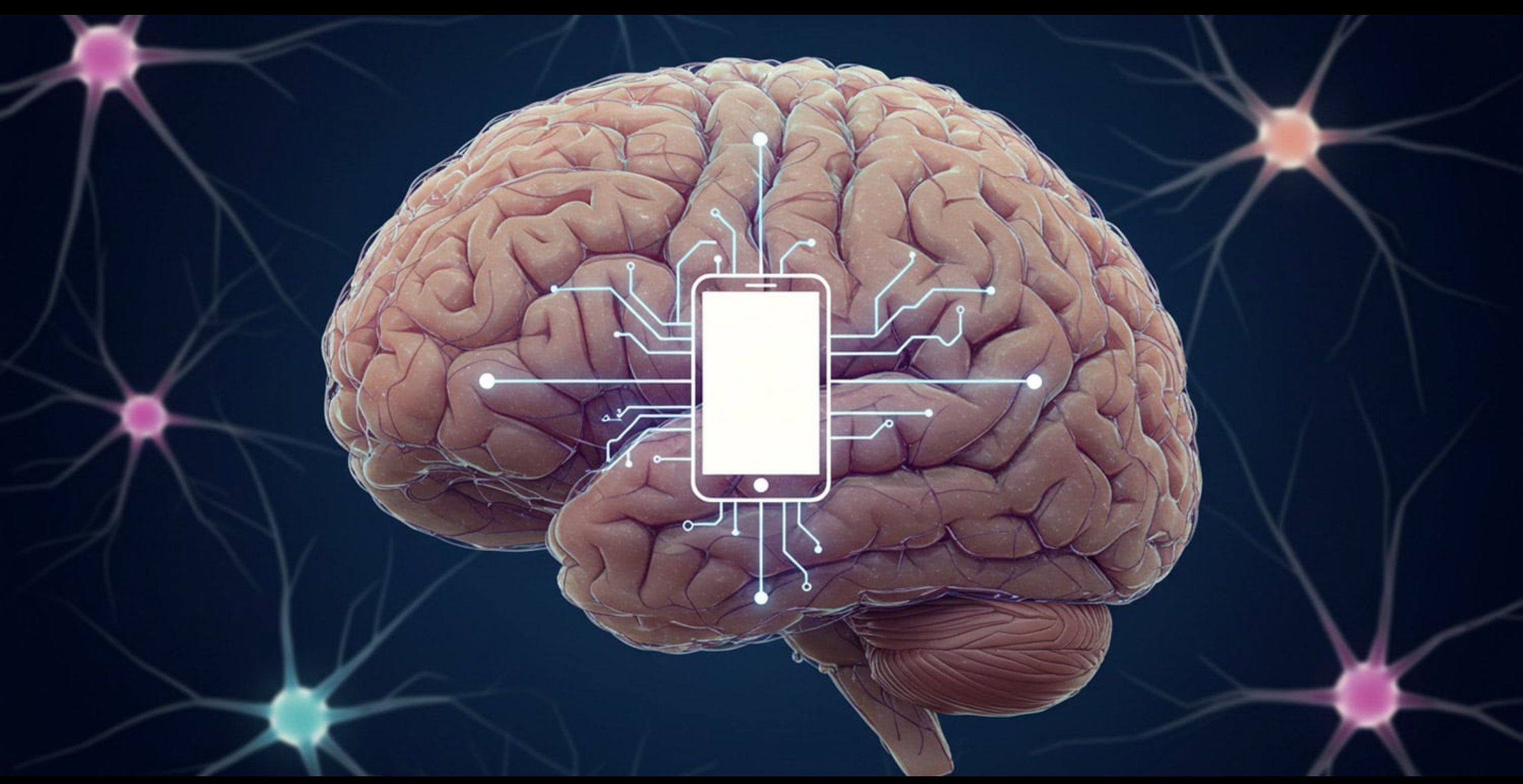
We are slowly losing our natural abilities as technology continues to advance. Even for the simplest of tasks, we depend on our devices — often without realizing how deeply this dependence has altered our thinking, memory, and attention. What began as a tool for convenience has gradually become a crutch that shapes how we live, think, and even remember.
—
The Forgotten Art of Memory
Before the digital era, people could remember dozens of phone numbers, addresses, or directions without much effort. Now, many of us struggle to recall even our own phone number. Psychologists call this phenomenon **“cognitive offloading”** — the process of relying on external devices to store information that we once held in our minds.
In a 2011 study by **Betsy Sparrow, Jenny Liu, and Daniel Wegner**, published in *Science*, researchers found that when people expected information to be available online, they were less likely to remember it themselves. This is now known as the **Google Effect** — our brains are adapting to remember where to find information rather than the information itself.
In short, we no longer *store knowledge*, we *store links*.
—
GPS and the Death of Direction Sense
If someone handed you a paper map today and asked you to navigate a route, would you be able to? The growing dependence on GPS navigation has quietly dulled our spatial awareness and mental mapping skills.
A 2017 study by **Veronique Bohbot** at McGill University found that people who frequently relied on GPS had reduced activity in their hippocampus — the part of the brain responsible for memory and spatial navigation. Long-term, this kind of disuse could increase vulnerability to memory-related diseases such as Alzheimer’s.
Our ancestors could traverse miles guided only by the stars, spoken directions, or intuition. Today, we can’t reach a friend’s house without Google Maps.
—
Technology and Attention: The Fragmented Mind
**Nicholas Carr**, in his influential book *The Shallows: What the Internet Is Doing to Our Brains*, explains how constant digital stimulation reshapes our neural pathways. Instead of deep, focused thinking, we develop habits of skimming, scrolling, and switching tasks rapidly — a cognitive trade-off that sacrifices depth for speed.
Even small calculations are now delegated to devices. Basic arithmetic, once second nature, now feels like effort. The more we outsource mental work to technology, the less our brain practices it — and like any unused muscle, it weakens over time.
—

Education and the Vanishing Skillset
We’re reaching a point where schools might one day allow open-book exams — and students could still fail, not because they lack access to answers, but because they no longer know *how to find* those answers in print. Many can’t navigate an index, skim a page, or connect ideas without the instant feedback loop of Google Search.
Libraries, once centers of curiosity, have become quiet relics. The few who still frequent them are often labeled as “old-fashioned” or “nerdy,” yet they’re the ones maintaining a muscle the rest of us are letting atrophy: sustained attention.
—
Common Sense in Decline
What used to be basic life skills — reading maps, mental arithmetic, memorizing numbers — now require tutorials. General knowledge, once gained through observation and conversation, is being lost to algorithmic feeds and filtered information bubbles. We risk a future where “common sense” has to be *taught* in schools as a survival skill.
—
From Mastery to Dependence
Technology was meant to amplify human ability, not replace it. Yet we’re moving toward a world where without our phones, many feel paralyzed. The device in our hand has replaced not only memory and direction but also patience, curiosity, and resilience.
The danger isn’t in technology itself — it’s in forgetting that it’s meant to *assist* us, not *replace* us. As we lose our natural skills, we risk surrendering the very essence of human adaptability.
—
A Call to Reclaim Ability
Use technology as an *extension* of your intelligence, not a substitute for it. Challenge yourself to remember phone numbers, solve simple math without calculators, and navigate without GPS occasionally. These small acts train the brain, keep it resilient, and remind us that our power doesn’t come from the screen — it comes from within.
The future belongs to those who stay *human* in a world becoming mechanical.