
(Living Parasites)
By Raj Mistry
Understanding the Habit That Quietly Controls Us
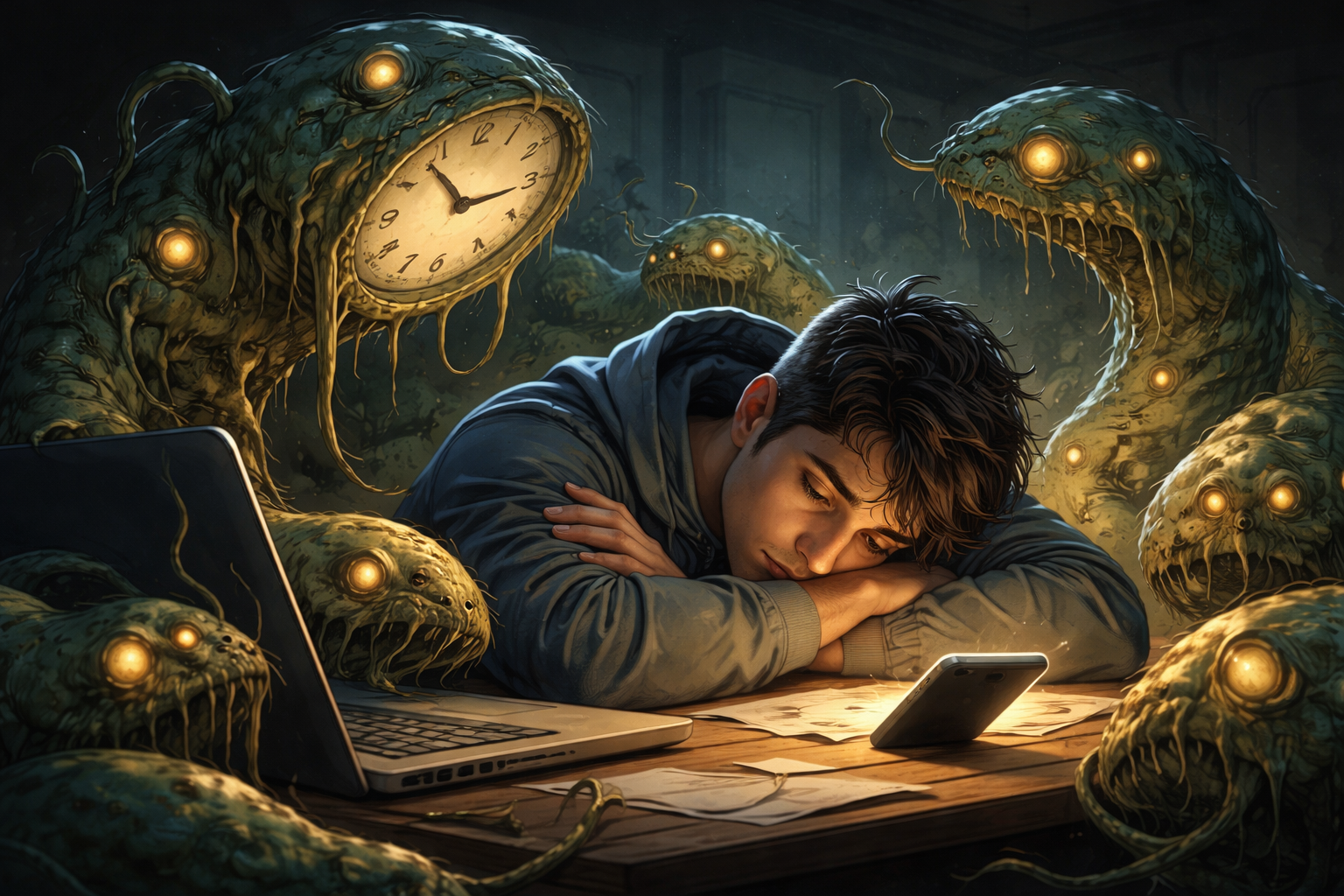
We don’t just procrastinate — we host habits that quietly feed on our time.
We all make plans. We promise ourselves we’ll start on the first day of the month, the week, or the year. But when the moment arrives, we postpone it “just for today.” Then tomorrow becomes next week… and before we realize it, months have slipped away.
These are the living parasites inside our habits — the invisible voices that whisper, “Not today. Maybe tomorrow.”
They don’t suck blood.
They drain purpose.
And the more we delay, the stronger they grow.
The Illusion of the Perfect Fresh Start
Every year before January 1st, gyms see a flood of new memberships. Motivation is high. People feel ready to transform their lives.
But when New Year’s morning arrives, reality looks different. Late nights, tired bodies, and one simple thought:
“I’ll start tomorrow.”
Tomorrow turns into next week.
Next week turns into next month.
And the resolution quietly expires.
The problem was never motivation.
It was the comfort of delay.
The 5:00 PM Trap Students Know Too Well
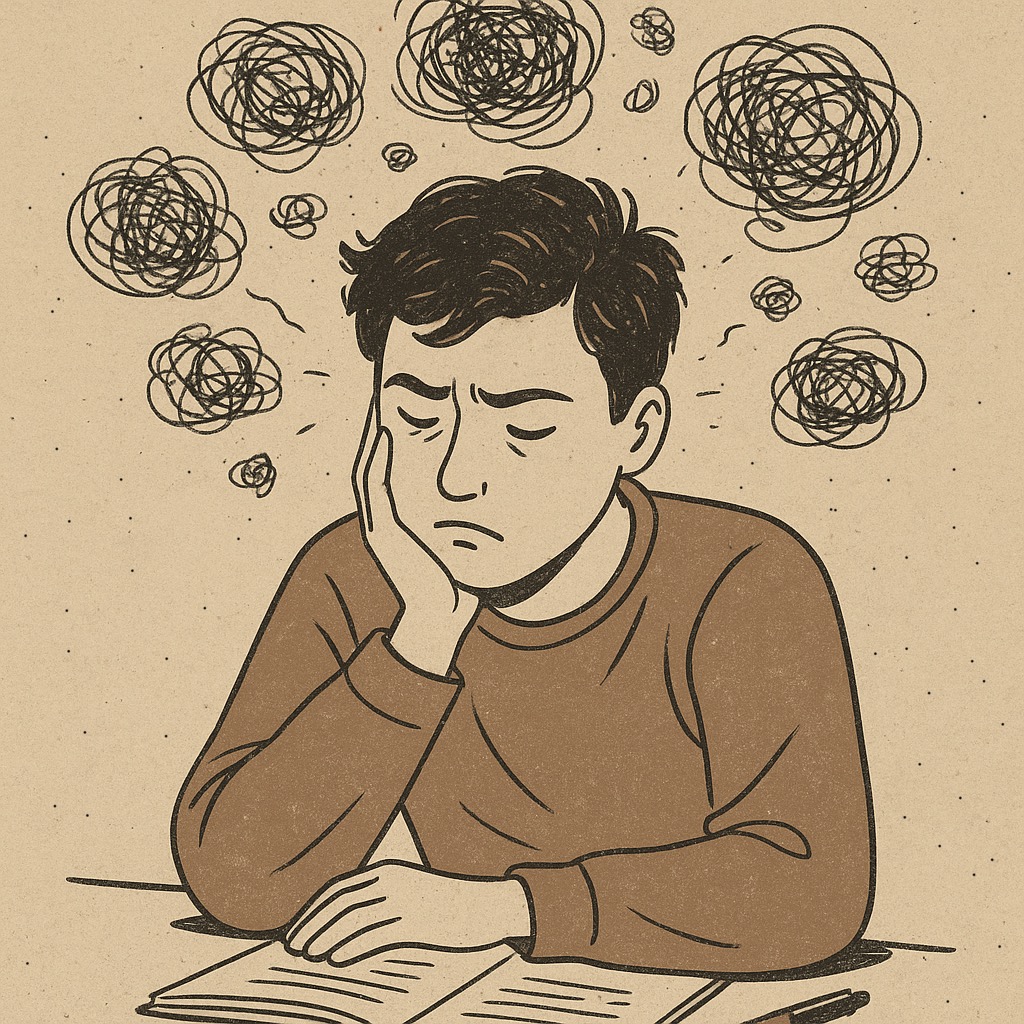
Students experience procrastination in its purest form.
You sit at your desk at 4:50 PM, planning to start studying at exactly 5:00.
You have ten minutes.
So you pick up your phone… just for a quick scroll.
Suddenly it’s 5:02.
“Let’s start at 5:10,” you tell yourself.
Then reels turn into more reels. Minutes become hours. And when exams arrive, panic follows.
Not because there wasn’t enough time —
but because small excuses quietly consumed it.
The Morning Snooze Loop
Procrastination doesn’t only attack productivity — it attacks mornings too.
You set the alarm for 6:00 AM.
It rings.
You hit snooze.
“Just ten more minutes.”
Before you know it, you’re rushing to get ready for work, repeating the same cycle every day.
This isn’t just laziness.
It’s something more dangerous:
Each broken promise lowers your self-trust.
Your brain starts learning:
“My words don’t mean much.”
And once self-trust drops, discipline becomes harder.
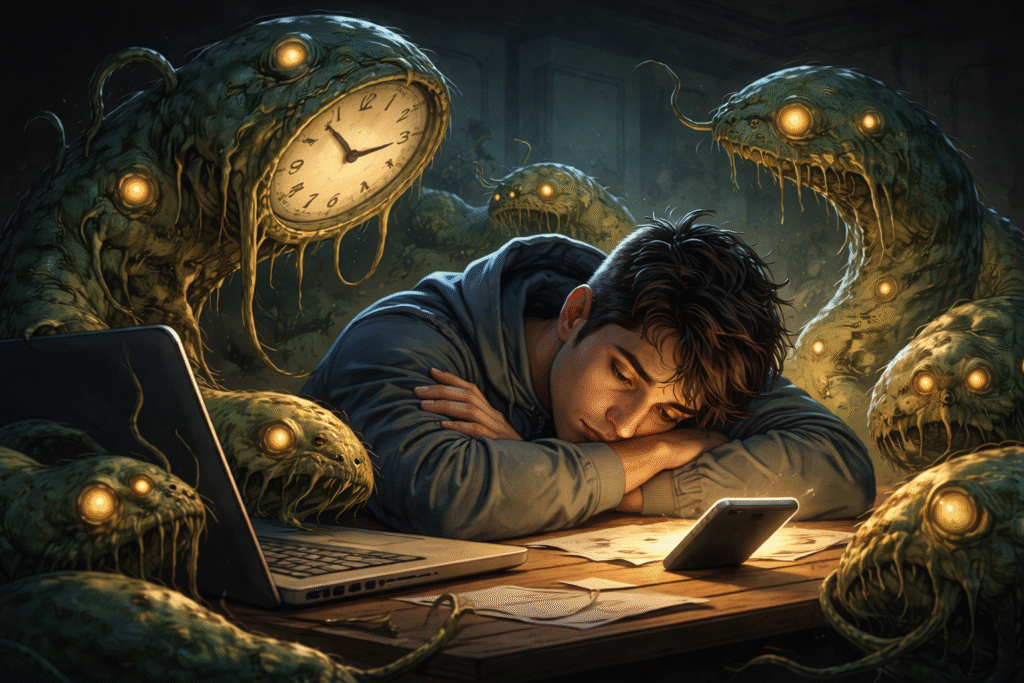
The Modern Parasite: Endless Digital Distraction
At night, we make another promise:
“Just five minutes on my phone.”
But those five minutes quietly turn into 3 AM.
Short videos, endless scrolling, quick dopamine hits — they feel harmless in the moment. But over time, they train the brain to prefer easy stimulation over meaningful effort.
That’s why procrastination today feels stronger than ever.
Because now, distraction is always within reach.
How to Kill the Parasite: Build Self-Trust First
The solution isn’t extreme motivation.
It’s small, consistent wins.
Start with a simple, realistic to-do list:
- Jog for 10 minutes in the morning
- Have breakfast at the table with family
- Reach the office 10 minutes early
When you complete small promises, your brain registers success.
It releases dopamine — the same reward chemical behind scrolling and gaming — but this time for discipline.
That’s how momentum begins.
Why Small Steps Work Better Than Big Goals
Most people fail not because they lack ability — but because their goals are too big to sustain.
Every completed task tells your brain:
“I keep my word.”
Every broken one tells it:
“My plans don’t matter.”
Over time, your brain simply stops taking your intentions seriously.
That’s why the smartest strategy is simple:
Start small.
Stay consistent.
Build self-trust first.
Final Thought
Procrastination doesn’t disappear on its own.
It survives on delay.
It grows on excuses.
And it weakens only when you act — even when you don’t feel ready.
You don’t need a perfect Monday.
You don’t need a new month.
You don’t need January 1st.
You just need the courage to begin today.
Because the real parasite was never time.
It was the habit of waiting.