
By Raj Mistry
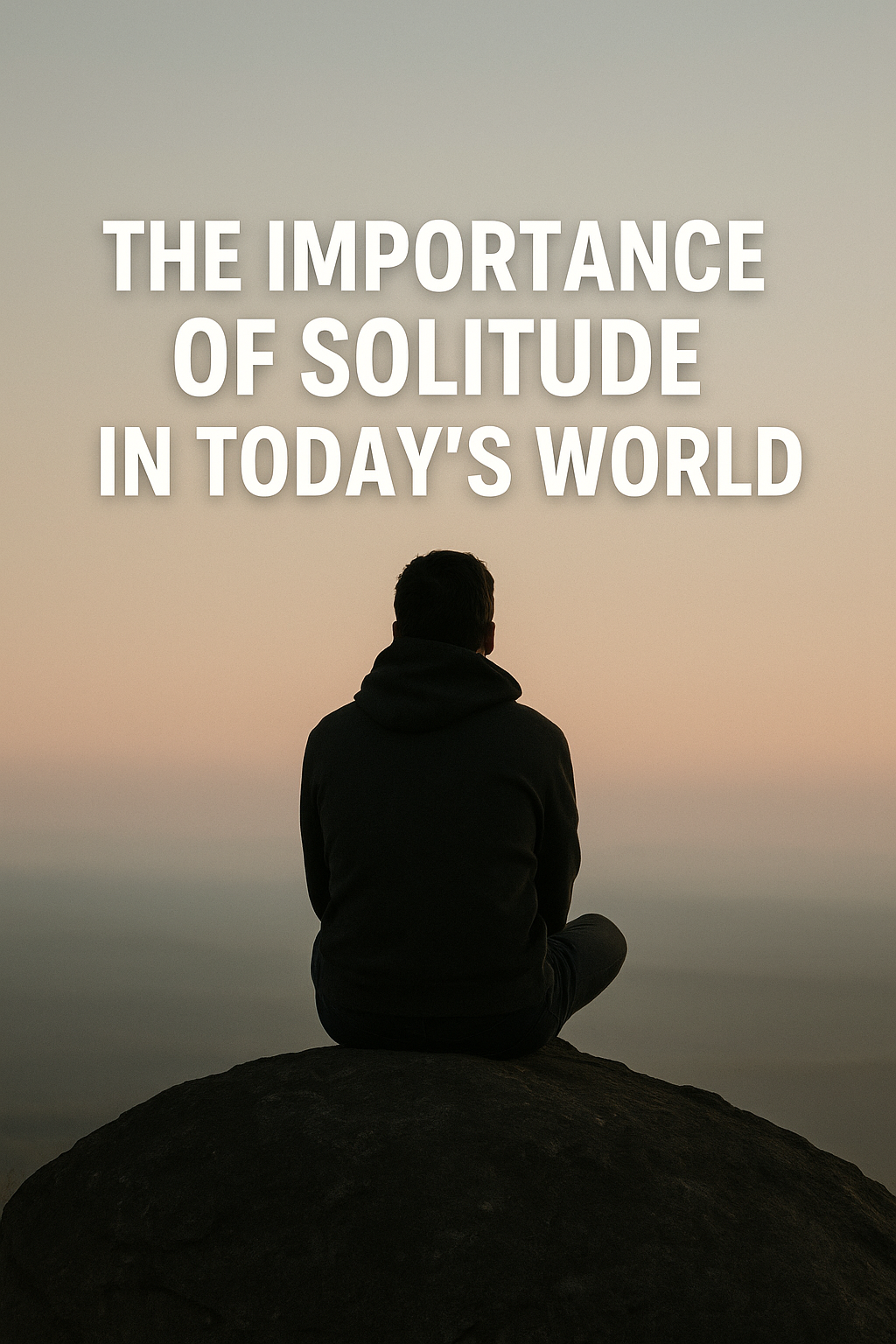
The Importance of Solitude in Today’s World
Solitude is one of the most powerful — and most misunderstood — practices in today’s fast-paced, hyper-connected world.
Most people fear being alone. They treat solitude like a punishment, something to escape from. But solitude isn’t loneliness. It’s strength.
In fact, solitude is where clarity begins.
It’s where peace settles in.
It’s where creativity, self-awareness, and emotional balance are born.
So why do we avoid it so desperately?
Because in silence, the mind shows us truths we often spend our entire lives running from.
Solitude vs. Loneliness: The Difference We Ignore
People often confuse solitude with loneliness — and that confusion has cost us deeply.
Loneliness is an emotional state.
It’s the feeling of being disconnected, unseen, or unloved — even when surrounded by people.
Solitude, on the other hand, is a choice.
It’s intentional time spent with yourself — to reflect, recharge, and reconnect internally.
Being alone doesn’t mean being lonely.
It means you are brave enough to sit with yourself without distractions.
Most people aren’t afraid of being alone.
They’re afraid of what their mind might say when no one else is around.
Why Solitude Is as Important as Breathing
Solitude isn’t a luxury. It’s a necessity.
Even 20–30 minutes a day can radically change how you think, feel, and respond to life.
1. Self-Awareness
In solitude, you finally hear your own thoughts — not society’s, not social media’s, not other people’s expectations.
You reflect on:
- Your goals
- Your emotions
- Your current life direction
You inspect your life honestly — something that’s nearly impossible when surrounded by noise and opinions.
2. Emotional Balance
When emotions run high — anger, sadness, anxiety, frustration — solitude calms the nervous system.
It lowers mental overstimulation and stabilizes your inner state.
People who regularly practice solitude are less reactive. External chaos affects them less.
They don’t explode at small triggers because they’ve already processed their emotions internally.
3. Creativity and Focus
Silence is fertile ground for creativity.
When distractions disappear, the mind blooms.
You write better. Think deeper. Learn faster.
Many of the world’s greatest ideas weren’t born in meetings or crowds — they were born in solitude.
Without constant interruptions, your brain finally gets the space it needs to connect ideas and think freely.
4. Better Decisions and Relationships
Solitude doesn’t isolate you from others — it actually improves how you relate to them.
When you understand yourself better, you become more empathetic toward others.
Instead of judging reactions, you start seeing emotions behind behavior.
You respond instead of reacting.
And that alone can transform relationships.
5. Mental Recharge
Modern life is draining:
- Work
- Studies
- Responsibilities
- Notifications
- Expectations
Solitude clears mental clutter. It silences background noise. It resets the brain.
Think of it as charging your internal battery — something no amount of sleep or scrolling can replace.
Why We Fear Solitude So Much
Despite its benefits, most people avoid solitude for two major reasons.
1. Dopamine Addiction and Social Media
Instagram Reels and YouTube Shorts may look harmless — but psychologically, they are extremely destructive.
They give instant dopamine hits without effort.
That’s why you scroll for hours — yet remember nothing.
Your brain becomes dependent on constant stimulation.
So when silence appears, it feels unbearable.
That’s not boredom.
That’s withdrawal.
Even 10 minutes without stimulation now feels uncomfortable for most people.
Impact on Children
For children, the damage is worse.
Early exposure to screens:
- Reduces attention span
- Slows emotional development
- Disrupts learning
- Creates tantrums when devices are removed
They’re not misbehaving — they’re dopamine-deprived.
2. Fear of Self-Reflection
Solitude forces uncomfortable questions:
- Am I happy?
- Am I growing?
- Do I have direction?
- Am I avoiding something?
Many people haven’t answered these questions — so they escape into:
- Phones
- Alcohol
- Endless noise
- Constant company
But reality doesn’t disappear just because you avoid it.
Solitude isn’t running away.
It’s facing your truth — and reshaping it.
Why Solitude Matters More Than Ever
Ask yourself honestly:
Why can’t you:
- Eat without TV?
- Walk without your phone?
- Sit alone in a restaurant?
- Watch a movie by yourself?
Because we’ve trained our brains to fear stillness.
But growth never happens in noise.
It happens in silence.
Solitude isn’t punishment.
It’s medicine.
It’s the only way to step out of chaos, hear yourself clearly, and return stronger.
The Courage to Be Alone
Solitude requires courage — especially at first.
The initial discomfort is real.
But like any new habit, it fades.
What replaces it is clarity.
Then confidence.
Then peace.
Time alone is not time wasted.
It’s time invested in yourself.
Final Advice
If there’s one habit that will quietly transform your life, it’s this:
Learn to enjoy your own company.
Make yourself your best friend.
Don’t depend on others for constant validation or happiness.
Solitude gives you:
- Strength
- Creativity
- Emotional stability
- Mental clarity
Sometimes, solitude can help you more than therapy —
because it teaches you to listen deeply to yourself.
And once you can sit with yourself in silence,
nothing in the world can truly disturb you again.