
By Raj Mistry
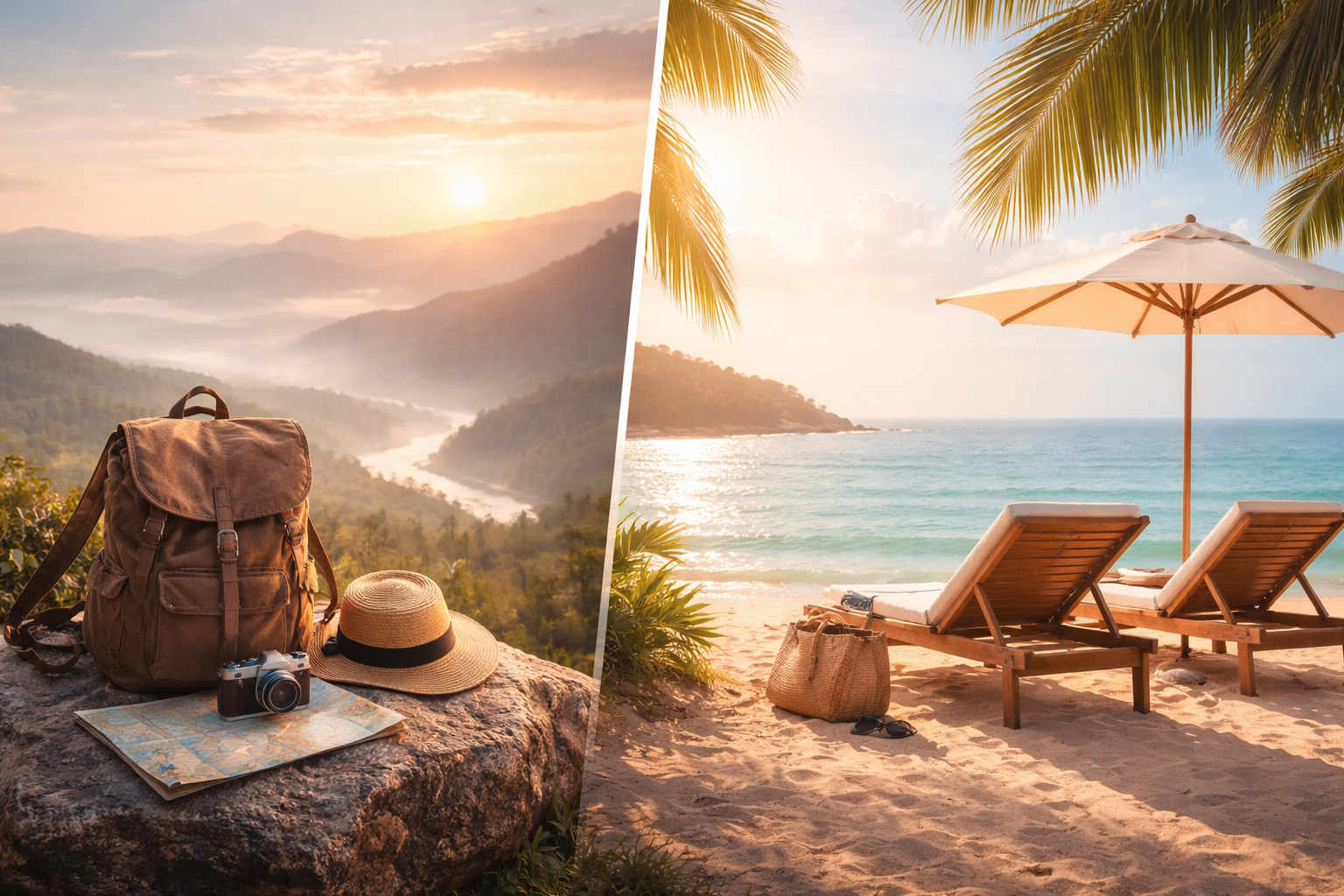
In today’s Instagram-driven world, we often use travelling and vacation as if they mean the same thing.
They don’t.
Both are important.
Both are beautiful.
But they serve very different purposes.
One expands you.
The other restores you.
Understanding the difference can help you choose what your mind and soul actually need, instead of following trends or social pressure.
Travelling: The Art of Exploration
Travelling is about exploration, curiosity, and growth.
It’s not just about visiting a new place — it’s about experiencing a different way of life. New cultures, new people, new perspectives. Travelling changes how you look at the world and, eventually, how you look at yourself.
Travelling doesn’t have to be expensive.
You don’t need luxury hotels or fancy itineraries.
You can:
- Use public transport
- Stay in hostels or affordable stays
- Eat local food instead of restaurant chains
These choices bring you closer to real people and real stories, not curated experiences.
When you travel, don’t make your plan too rigid.
Have a structure — but leave room for the unknown.
Some of the best memories are never planned:
- A hidden waterfall shown by a local
- A small café you’d never find online
- A temple, lake, or street you accidentally walk into
That’s why it helps to keep two extra days unplanned.
Not to “cover more places,” but to slow down.
When you’re not rushing, you actually experience the place instead of just ticking it off a list.
Travel Teaches What Books Can’t
People often suggest reading books or biographies to learn about life.
Books are great — but travel gives you living chapters.
When you meet ten new people while travelling, it’s like reading ten different books:
- Their struggles
- Their choices
- Their worldview
Some people will inspire you.
Some will disappoint you.
Some will challenge your beliefs.
Good people give you experiences.
Bad people give you lessons.
Either way, you grow.
Travelling also teaches respect — for cultures, traditions, and lifestyles different from your own. When you talk to locals and listen without judgment, you realize how many ways there are to live a meaningful life.
Travel doesn’t just show you the world.
It reshapes how you understand it.
Vacation: The Art of Rest
Vacation is different.
If travelling is about movement, vacation is about stillness.
A vacation is not meant to challenge you.
It’s meant to heal you.
This is where comfort matters.
On a vacation, it’s okay to choose:
- A cozy room with a mountain or sea view
- Good food that melts into comfort
- Spa sessions, massages, long baths
- Late mornings and slow evenings
Vacations are for doing less — not more.
They give your nervous system a break.
No schedules.
No deadlines.
No pressure to “make the most of it.”
Sometimes, the best vacation plan is no plan at all.
Slowing Down Is the Point
Vacations work best in quieter places:
- Small villages
- Hill stations
- Riverside stays
- Low-crowd destinations
Places where evenings are about tea by the river, not notifications on your phone.
Mornings can start with a slow walk, cold air, and silence.
Days pass without urgency.
Nights end with a movie, a book, or just stillness — alone or with someone you love.
You don’t always need to chase experiences.
Sometimes, staying in one beautiful place is enough.
So, What Do You Really Need Right Now?
This is the real question.
- If you feel stuck, uninspired, or narrow-minded — travel.
- If you feel exhausted, burnt out, or overwhelmed — take a vacation.
Travel opens your mind.
Vacation heals your body and soul.
Both are necessary — but for different phases of life.
The mistake we make is choosing based on trends:
- Travelling just for Instagram
- Taking vacations only to escape responsibility
Instead, choose consciously.
Final Thought
Travel to discover.
Vacation to recover.
One changes how you see the world.
The other reminds you to enjoy being in it.
Listen to what your heart needs — not what social media expects.