
By Raj Mistry
Overthinking has quietly become one of the most common mental habits. Almost everyone claims to be an “overthinker,” yet very few understand why it happens—or how deeply it shapes their emotions, confidence, and decisions.
What makes it ironic is this: When asked to think creatively, we struggle. But when it comes to overthinking, our imagination runs endlessly—like a movie that never stops playing.
Why We Love Overthinking
Overthinking feels bad—but part of us still enjoys it.
When something goes wrong—an argument, rejection, embarrassment—we replay it in our head. In real life, we may not have had the right words, confidence, or courage to respond.
But in our mind, everything changes.
There are no rules. No consequences. No judgment.
So we rewrite the scene.
We imagine the perfect comeback. We imagine winning the argument. We imagine people agreeing with us, even admiring us.
For a moment, the loss turns into a win.
And the mind loves that feeling.
That’s why it keeps going back.
The Trap: One Thought Becomes Many
Overthinking never stays in one version.
The mind starts creating variations:
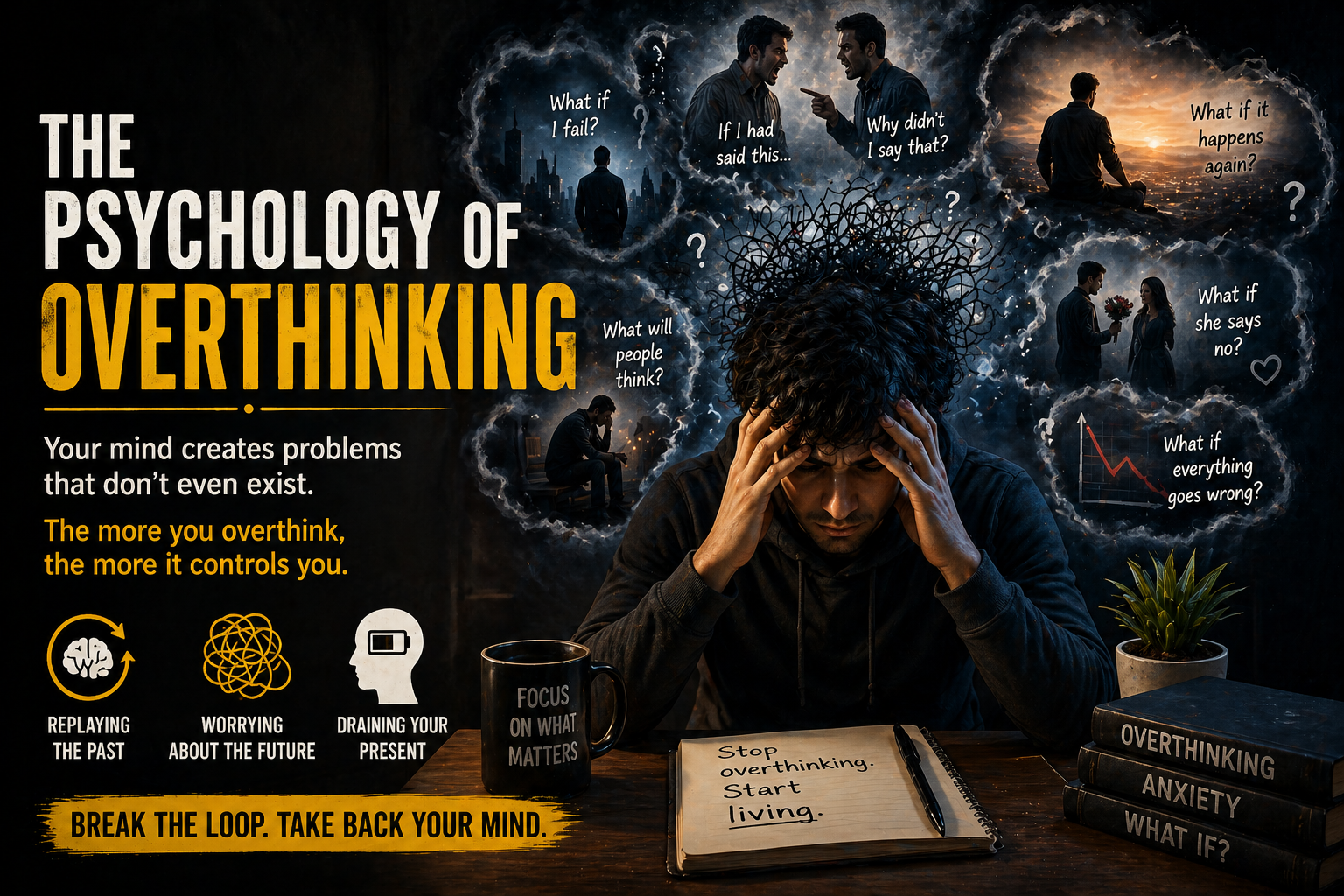
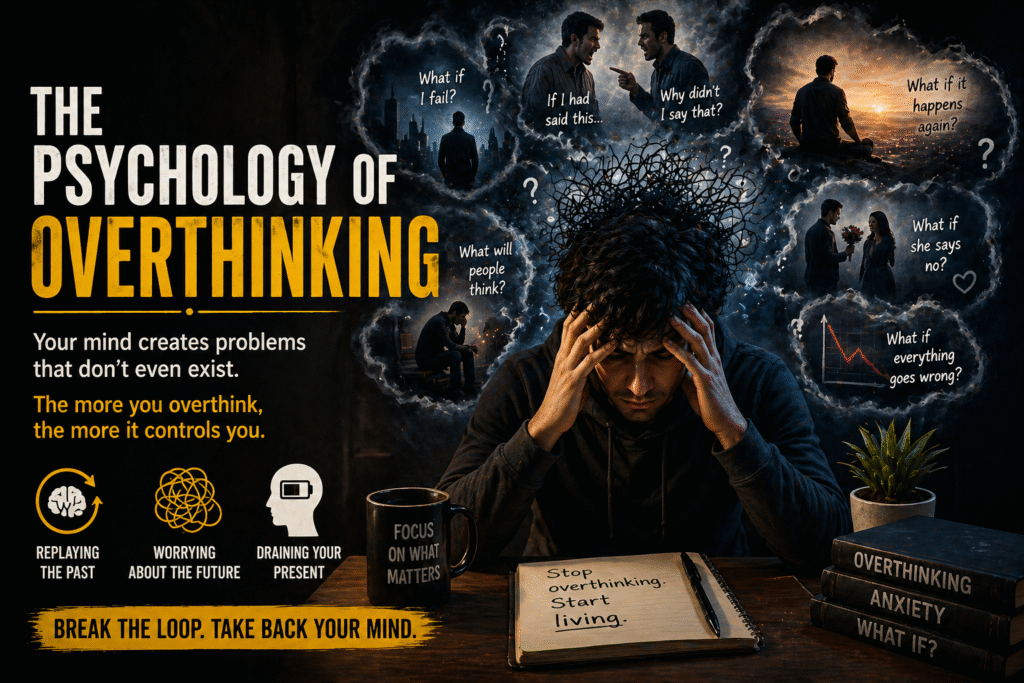
- “If I had said this…”
- “If I had done that…”
- “What if it happens again?”
- “Next time I’ll respond like this…”
What begins as a way to cope slowly becomes a habit.
Then a loop.
And eventually, something close to an addiction.
Because every time reality feels uncomfortable, the mind escapes into a place where everything can be controlled.
When Overthinking Turns Against You
At first, overthinking may feel empowering.
But it doesn’t stay that way.
The same imagination that creates “winning scenarios” can just as easily create fear:
- “What if everything goes wrong?”
- “What if I’m not enough?”
- “What if people leave?”
Now the mind is no longer helping—it’s attacking.
Negative thoughts stick faster than positive ones. The more time you spend with them, the more familiar they become. And slowly, what once felt like imagination starts feeling like reality.
That’s when overthinking becomes dangerous.
Overthinking vs. Daydreaming
They look similar—but they feel very different.
Daydreaming
- Usually positive or hopeful
- Feels light and enjoyable
- Gives temporary inspiration
Overthinking
- Often negative or fear-driven
- Feels heavy and draining
- Leads to anxiety and doubt
Both happen in your head.
But neither moves your life forward.
Why It’s So Hard to Stop
Overthinking continues because it gives us two powerful illusions:
1. Illusion of Control You feel like you can rewrite situations however you want.
2. Illusion of Closure You believe that if you think enough, you’ll feel better.
But in reality, overthinking doesn’t fix the past. It only consumes the present.
The Core Truth
You don’t overthink because you are weak.
You overthink because your mind is active—but not directed.
The brain needs something to focus on.
And if you don’t give it something real, it will create something imaginary.
Final Thought
Overthinking is not thinking.
It is uncontrolled thinking.
And anything that is not controlled eventually controls you.