
By Raj Mistry
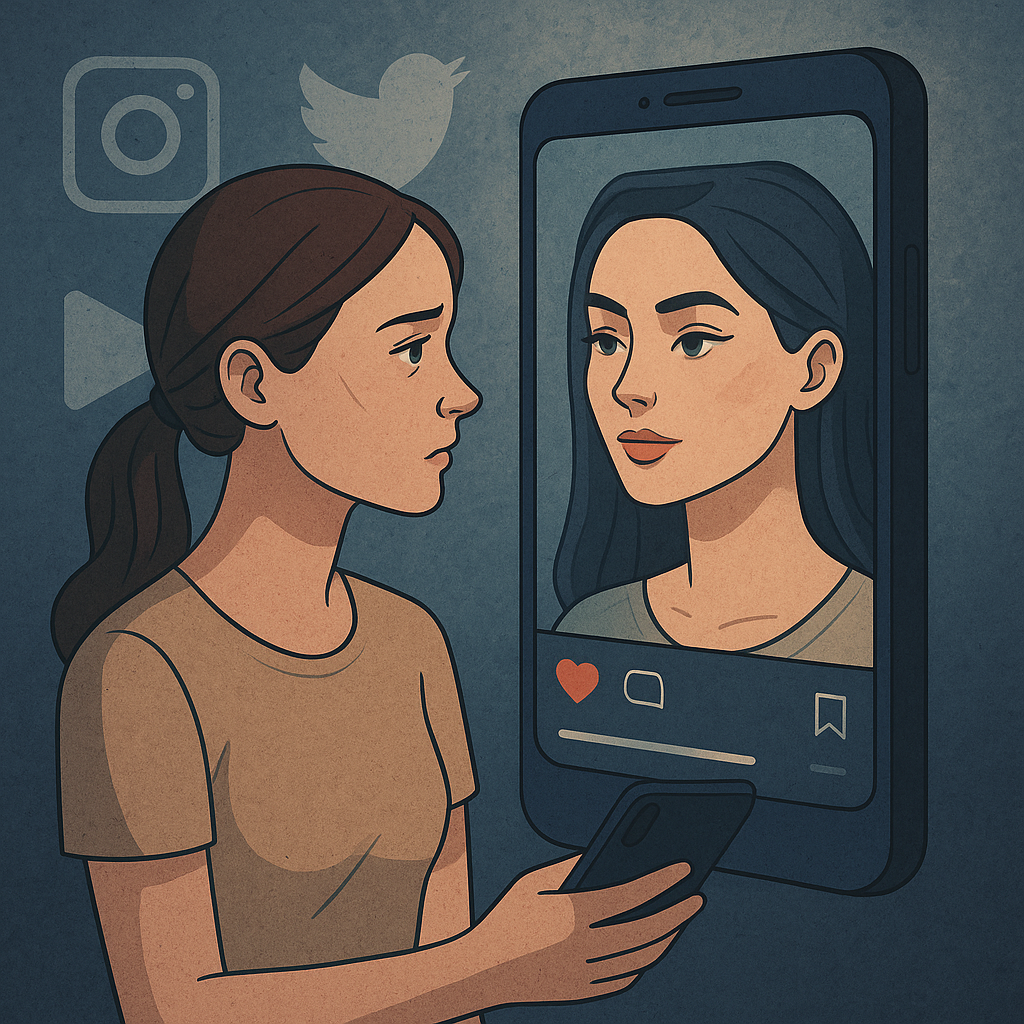
We all know excessive screen time is harmful. We’ve heard it affects our sleep, attention, and creativity — but we still can’t stop scrolling. We tell ourselves we’re “just checking something quickly,” and an hour disappears.
But while adults are losing focus, children are losing something far more important — their ability to develop naturally.
⸻
The Real Victims of the Screen
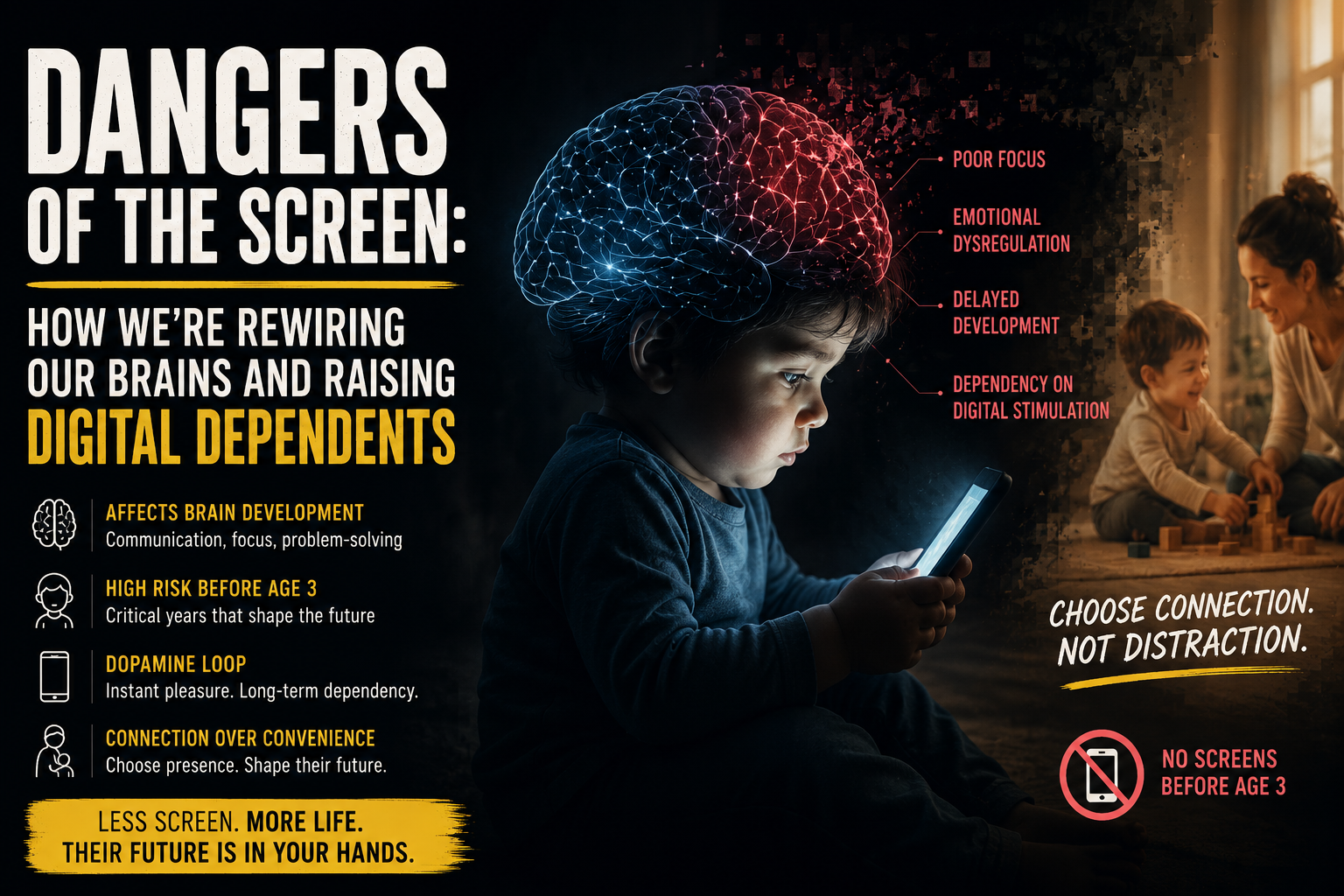
For adults, screen addiction leads to procrastination and burnout. But for children — especially below the age of three — it can alter how their brain grows.
Doctors and psychologists have repeatedly warned that giving a screen to a child under three can cause developmental delays in:
• Communication and language learning
• Problem-solving and logical thinking
• Motor skills and coordination
• Focus and emotional regulation
You might think you’re helping when you hand a crying child your phone. But what you’re really doing is training their brain to depend on external stimulation for calm.
Screens are designed to capture attention, not nurture it.
⸻
The False Calm: Dopamine and the Digital Pacifier
Here’s what actually happens. When a baby watches a colorful video, the brain releases dopamine — the “happy” hormone. It feels good, the crying stops, and parents breathe a sigh of relief.
But when the screen goes away, that dopamine suddenly drops — and the child becomes restless or angry. So you give the screen again, and the cycle repeats.
That’s how dependence starts — not on the device, but on the feeling it gives.
It’s the same trap adults fall into with social media — scrolling reels for “just five minutes” to escape stress. We call it entertainment, but our brain calls it addiction.
When this pattern begins before age three, it shapes how the brain develops. Instead of learning to calm down naturally, the child learns to outsource happiness to a screen.
And once dopamine becomes the shortcut to peace, effort feels like punishment.
⸻
What This Does to the Growing Mind
The early years of childhood are when the brain grows fastest. Children are supposed to develop through touch, movement, sound, and observation.
They need to explore textures, voices, people, and problems — not pixels. That’s how neurons connect, and how emotional intelligence develops.
When a screen replaces human interaction, the brain misses out on thousands of tiny lessons:
• How to read facial expressions
• How to respond to tone of voice
• How to handle boredom
• How to self-soothe without a device
These aren’t small things. They’re the foundation of communication, focus, and emotional stability — the very skills many adults now struggle to rebuild.
⸻
“Easy Fix” Parenting
Most parents don’t mean harm — they mean peace. A crying child, a tired parent, a busy day — a phone feels like the easiest solution.
But easy doesn’t mean harmless. Every time we use a screen to stop the crying, we’re telling the child: “Don’t feel. Distract yourself.”
We’re teaching them escape instead of endurance.
And the results are visible everywhere — kids who get irritated easily, lose focus quickly, and can’t sit still without stimulation. It’s not bad parenting — it’s conditioned dependency.
We’ve replaced playgrounds with pixels, storybooks with shows, and human patience with algorithms.
⸻
Why Tech Giants Don’t Let Their Kids Use Screens
Here’s the biggest irony. Tim Cook, Mark Zuckerberg, Bill Gates, and other tech leaders — the very people who built these technologies — don’t allow their children to use screens freely.
Most of them limit or completely ban screen time until their kids are 14–16. Why? Because they understand what these devices do to the brain.
Some families even use a reward system: “Read one book, and you get 30 minutes of screen time.”
That’s how you build discipline — by teaching effort before reward. And when you raise a child like that, they naturally prefer curiosity over consumption.
They’ll reach for books, not phones — because their mind was trained to seek growth, not instant gratification.
⸻
So What Went Wrong With Us?
It’s not the invention — it’s the intention. Screens were meant to connect us, not control us. But now, they dominate every corner of life — from our breakfast tables to our bedrooms. We check phones before brushing our teeth, scroll before sleeping, and text while talking.
We’re not living with screens anymore — we’re living through them.
And for children, who learn by imitation, that’s even worse. If parents are glued to devices, kids will follow. You can’t teach presence while being absent behind a screen.
⸻
The Healthier Path Forward
Here’s the truth: screens aren’t pure evil — they’re tools. The problem is when the tool starts using you.
If you want to protect your child’s mental health, start small:
• No screens during meals or before bed.
• No screens under age 3, except video calls with family.
• Replace phone time with books, puzzles, or outdoor play.
• Set clear “screen-free zones” in the house — like the dining table or bedroom.
And most importantly — be an example. Put your own phone away sometimes. Kids don’t listen as much as they observe.
⸻
Final Thought
Giving your child a screen won’t make them smarter. It might make them quieter — but silence isn’t peace.
Real peace comes from human connection, not pixels.
So next time your child cries, hold them instead of handing them a phone. Because what you give now