
By Raj Mistry
The title sounds confusing, right?
Benefits of boredom? What good could boredom possibly bring?
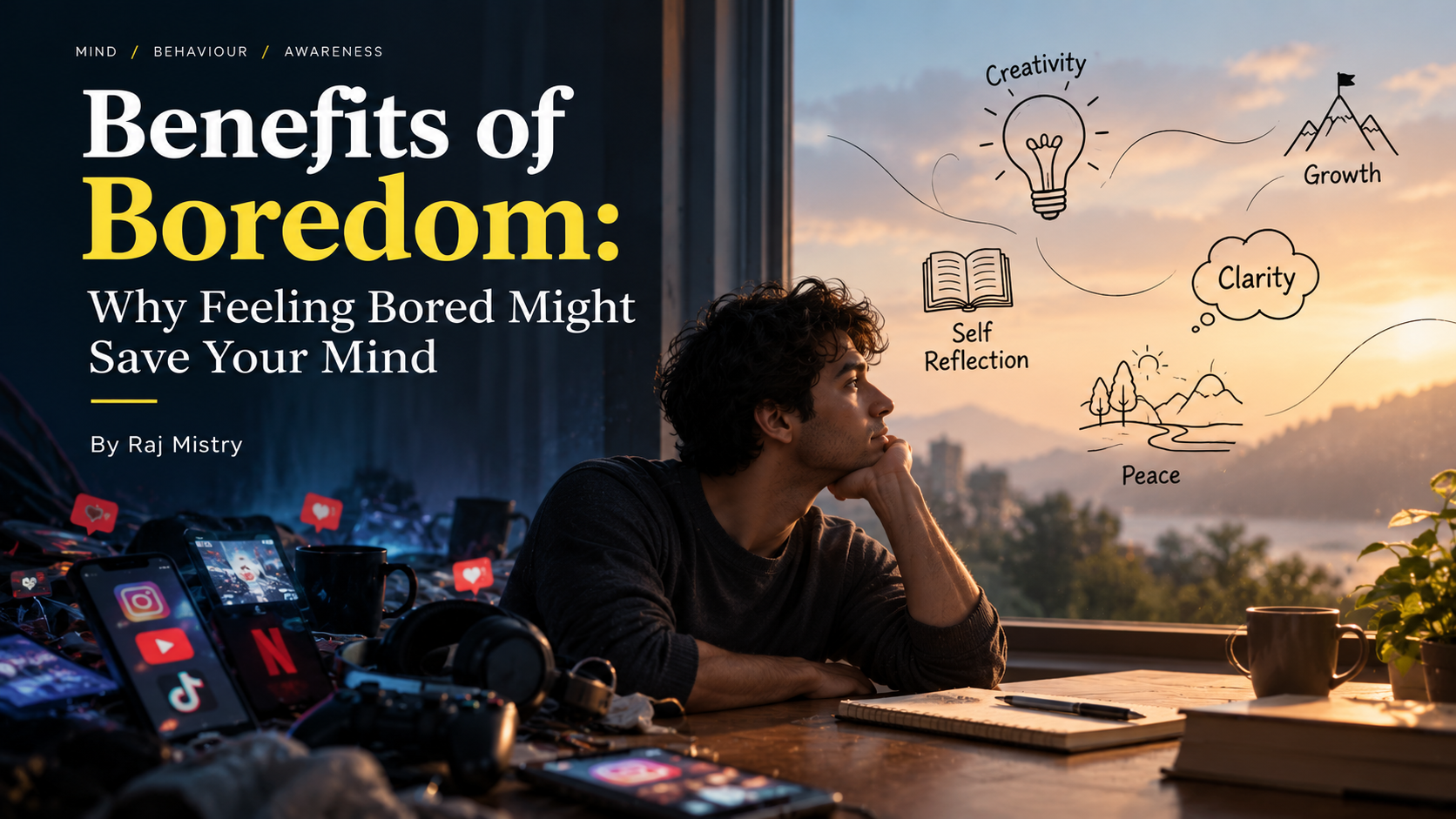
We’ve been trained to believe boredom is something bad—something we should escape from immediately. The moment boredom hits, our hands reach for the phone. We open Instagram, YouTube, Netflix, games, or anything that can fill the silence. And if nothing works, we sleep. We treat boredom like a warning sign, as if something is wrong with us or with the place we’re in.
But boredom is not the enemy. In fact, boredom might be one of the most important mental states we’ve forgotten how to sit with.
Why We Hate Boredom So Much
We don’t actually hate boredom. What we hate is being unstimulated.
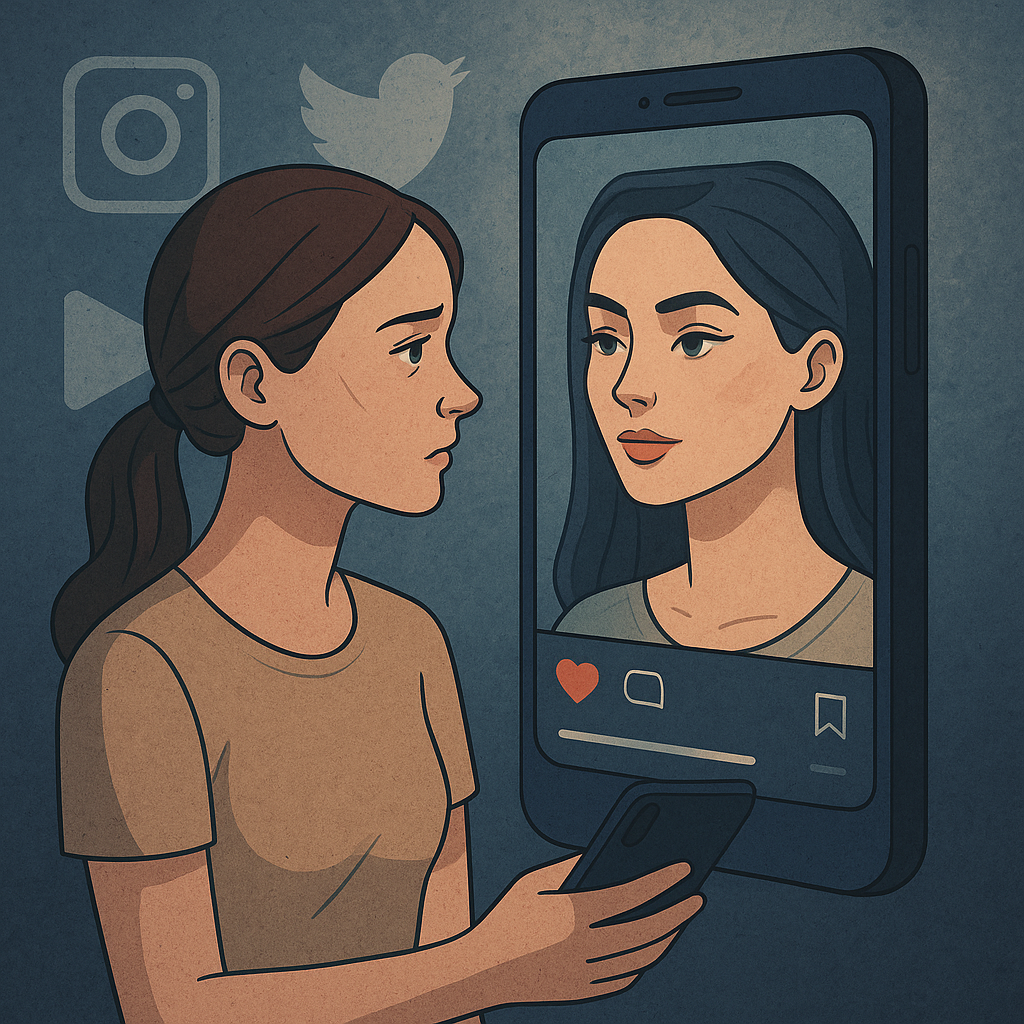
Our senses are constantly occupied—screens, sounds, notifications, content. We’ve trained our brain to expect frequent stimulation, so when that stimulation suddenly stops, the brain doesn’t feel neutral anymore. It feels uncomfortable.
That discomfort is what we often experience as boredom. We’ve overstimulated ourselves to a point where silence feels wrong. We’re so used to something happening every few seconds that doing nothing starts feeling like a problem.
But maybe nothing is wrong.
Maybe your mind is simply asking for a break from constantly being entertained.
Boredom Does Not Refill Dopamine
Let’s clear something up properly.
Boredom does not refill dopamine. Dopamine is always being produced by the brain. What boredom actually gives us is a break from constantly chasing stimulation.
When you constantly chase stimulation—reels, games, alcohol, binge-watching, or anything else that keeps your mind occupied—simple things can gradually start feeling less enjoyable. You may begin needing stronger stimulation just to feel normal, and without it, you may feel low, restless, or dull.
So when you sit with boredom, you’re not gaining dopamine.
You’re stopping the constant chase.
You’re giving your mind space to settle instead of immediately feeding it another source of stimulation. That’s why boredom can feel uncomfortable at first but restorative later. The discomfort is often the very thing we keep trying to escape.
What Happens If You Never Get Bored?
If you’re never bored, it means your mind is always occupied. But most of that occupation isn’t necessarily creativity or deep work. Often, it’s passive consumption.
When you’re constantly entertained, you never feel the urge to create.
Think about it. Every hobby you enjoy today—writing, music, fitness, learning—may have felt boring at the beginning. You didn’t necessarily enjoy it instantly. You stayed with it long enough for curiosity, skill, and meaning to develop.
If boredom never arrived, you might never start.
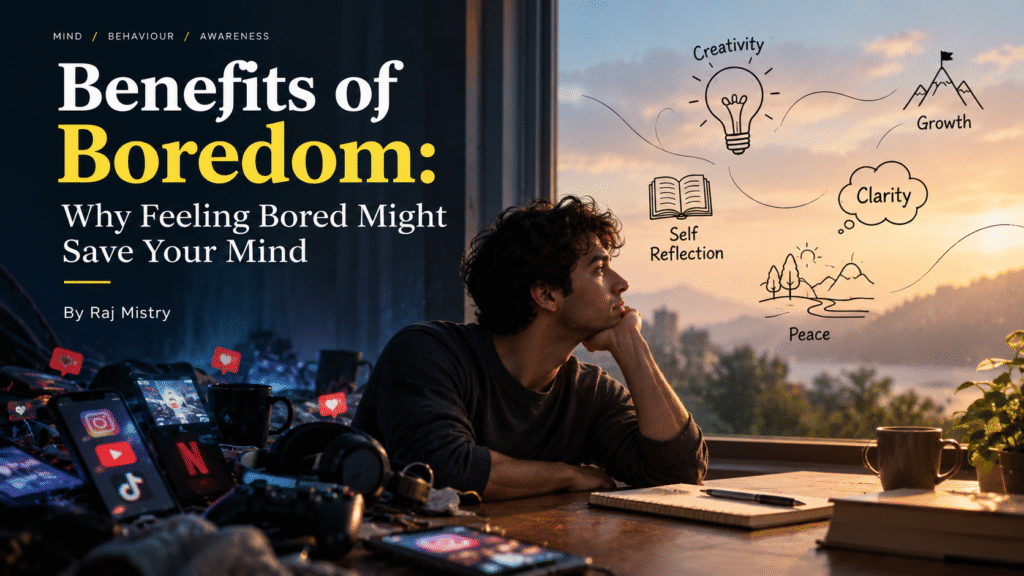
Boredom can be the doorway to creativity.
When stimulation stops, your mind finally has room to wander. And sometimes, that wandering leads somewhere you wouldn’t have reached while constantly consuming something.
Boredom Pushes You Toward Growth
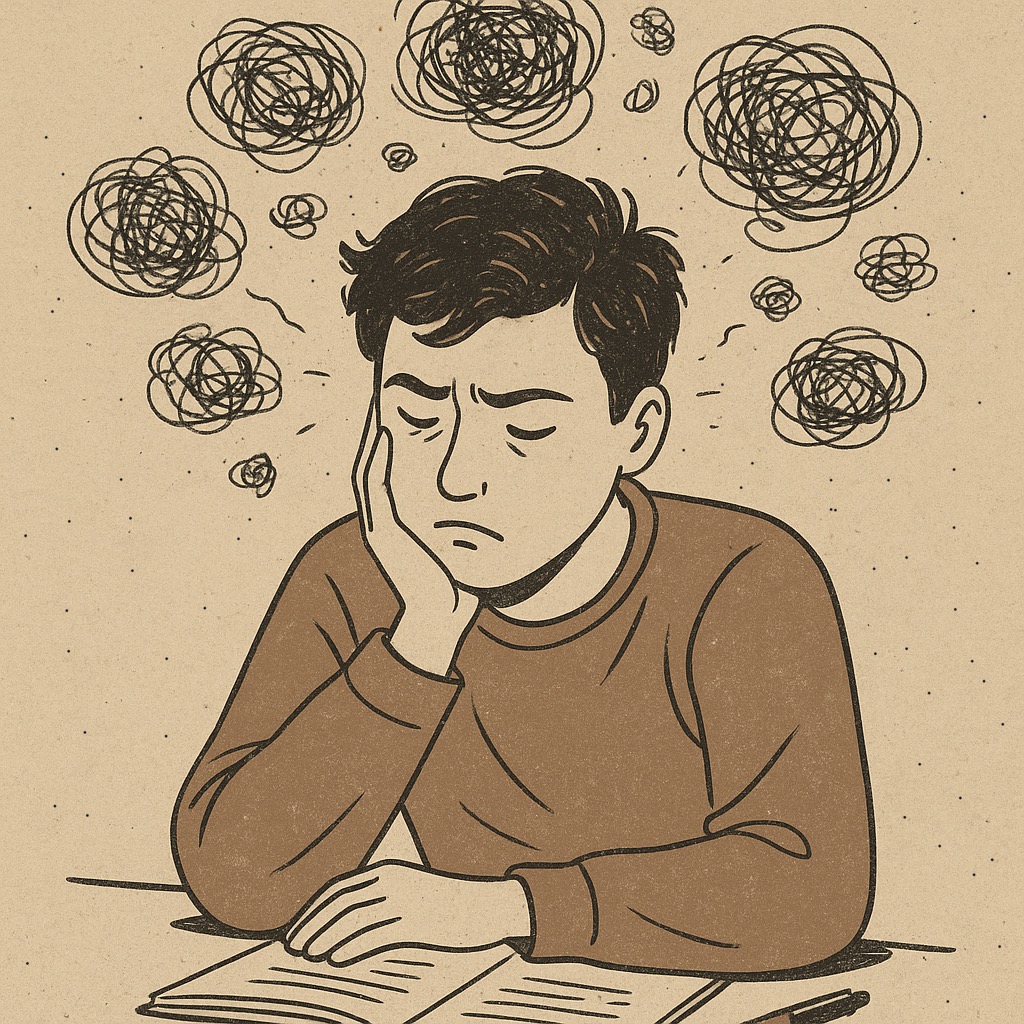
When stimulation disappears, something interesting happens. Your mind starts asking questions you may have been avoiding.
What am I doing with my life?
Am I actually moving forward, or am I just staying busy?
What have I been avoiding?
These thoughts can feel uncomfortable—and that may be exactly why we escape boredom so quickly.
Not necessarily because boredom itself is painful, but because self-reflection can be confronting.
Boredom exposes the gap between where you are and where you want to be. And instead of sitting with that gap, we often reach for something that makes us forget it exists.
Why We Escape Boredom Instead of Using It
Scrolling. Watching. Drinking. Gaming. Sleeping.
We distract ourselves not necessarily because we’re lazy, but because distraction is easier than self-honesty.
Boredom invites awareness.
And awareness demands responsibility.
Responsibility can feel heavy when you’re not used to carrying it. So instead of listening to what our mind is trying to tell us, we give it something else to focus on.
But what if we stopped escaping so quickly?
What if, instead of immediately reaching for our phone, we simply sat with the discomfort for a while?
Maybe we would start writing. Maybe we would read. Maybe we would learn something. Maybe we would think clearly about a problem we’ve been avoiding. Maybe we would create something, go outside, or simply talk to someone without a screen between us.
You don’t have to force yourself to be productive. Just don’t escape immediately.
At first, it may feel dull.
Then it may become calm.
And eventually, it may become meaningful.
Boredom Is Not Emptiness
Here’s a thought worth sitting with:
Maybe boredom is not an empty state. Maybe it’s our default emotional state.
We only label it “boredom” because we’ve trained ourselves to be constantly engaged. When stimulation disappears, it feels strange—not necessarily because something is missing, but because we’re no longer surrounded by something demanding our attention.
Boredom isn’t absence.
It’s space.
And space is where thinking, planning, creativity, and clarity can begin.
When you stop filling every empty moment, you start noticing what exists inside those moments. You may notice your thoughts. Your questions. Your dissatisfaction. Your curiosity. Your ideas. Things that were always there but were constantly being drowned out by stimulation.
Final Thought
Boredom isn’t something to destroy.
It’s something to use.
It gives your mind a chance to step away from constant stimulation. It creates space for clarity, creativity, reflection, and growth. And sometimes, what feels like boredom is simply the beginning of your mind becoming comfortable with stillness again.
So the next time boredom shows up, don’t run immediately.
Sit.
Give it some time.
Your mind may know what to do next.