
By Raj Mistry
The middle class is the backbone of almost every society. They work hard, pay their bills, raise families, and spend most of their lives trying to create a better future.
Yet many remain financially stuck for decades.
The problem is not a lack of effort. In fact, the middle class often works harder than anyone else. The real issue is that effort alone does not guarantee progress. Without the right priorities and long-term thinking, hard work can become nothing more than a treadmill — exhausting, but stationary.
The Illusion of Progress
Most middle-class families spend their lives chasing financial security. They save, budget, and constantly worry about the future.
Ironically, that same pursuit often keeps them trapped.
They become extremely careful with certain expenses while being surprisingly careless with others. Essential investments such as health insurance, emergency funds, or skill development are often postponed.
The logic is simple:
“Nothing bad will happen.”
Until something does.
One accident, one illness, or one unexpected crisis can erase years of savings.
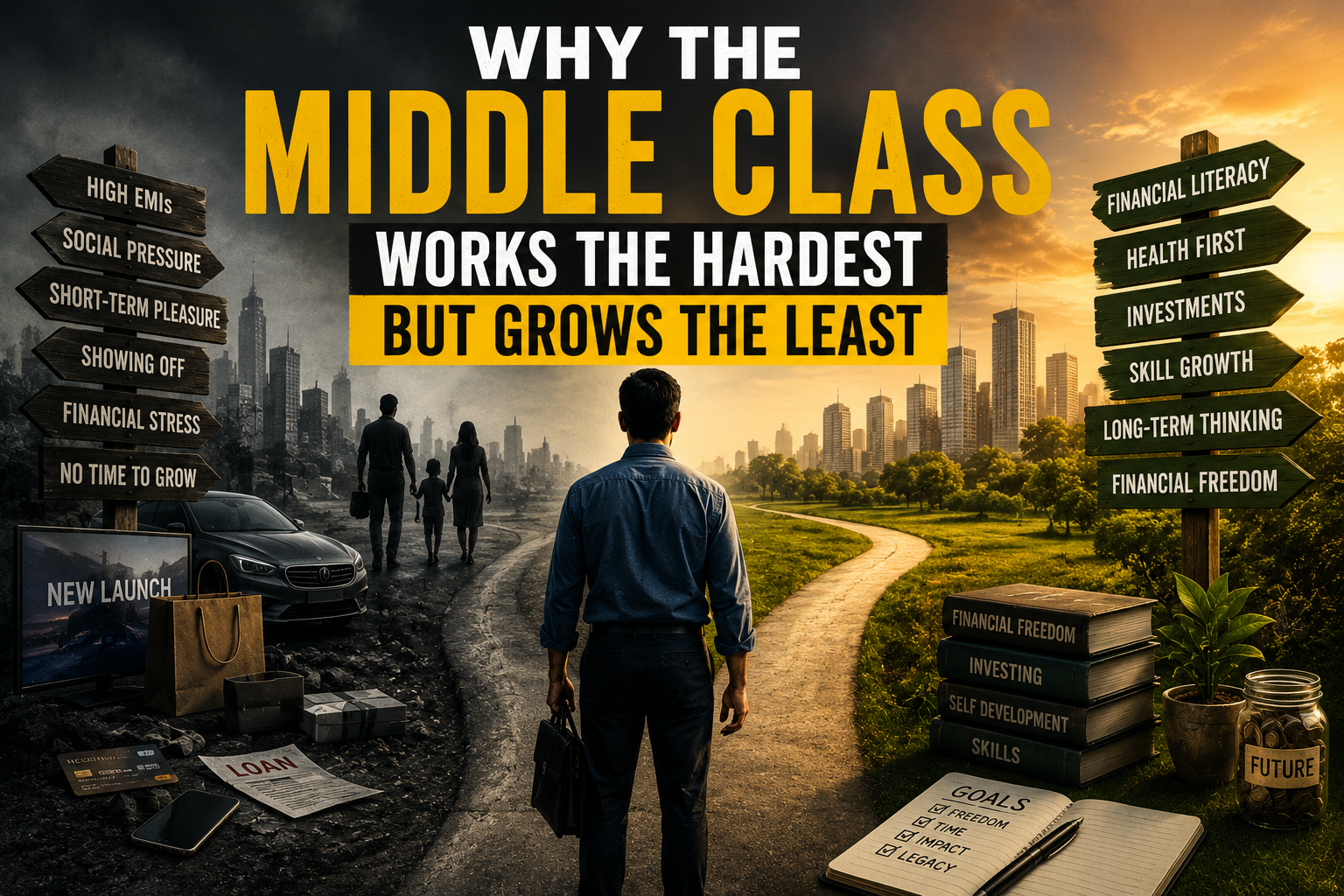
At the same time, many people spend heavily on things that create the appearance of success rather than actual security.
A wedding becomes a public performance. A loan-funded lifestyle becomes normal. Expensive gadgets, luxury vehicles, and status purchases quietly replace long-term planning.
The goal slowly shifts from becoming successful to appearing successful.
Comfort Disguised as Security
The middle class values stability.
A steady salary. A predictable routine. A secure future.
There is nothing wrong with that.
The problem begins when security becomes the only goal.
Every opportunity is evaluated through fear:
- What if it fails?
- What if I lose money?
- What will people say?
As a result, many people spend their entire lives protecting what they already have rather than building what they actually want.
Comfort feels safe.
But comfort can also become a cage.
Many dreams die not because they were impossible, but because they were considered too risky.
The Short-Term Pleasure Trap
Another challenge is the tendency to prioritize immediate gratification over long-term gain.
There is often money available for:
- streaming subscriptions,
- expensive phones,
- branded clothing,
- frequent dining out,
but somehow not enough for:
- learning a new skill,
- professional certifications,
- investments,
- health protection,
- personal development.
The issue is not income alone.
It is allocation.
Short-term pleasure feels rewarding today. Long-term investments often feel boring because their rewards arrive years later.
The human brain naturally prefers immediate gratification, and many people never learn to overcome that tendency.
The Fear of Falling Behind
The middle class lives in a unique psychological position.
The poor worry about survival.
The wealthy focus on expansion.
The middle class worries about falling.
They have enough to lose, but not enough to feel secure.
That fear shapes many decisions.
People stay in jobs they dislike because leaving feels dangerous.
Parents push children toward “safe” careers because uncertainty feels threatening.
Opportunities are rejected not because they are bad, but because they are unfamiliar.
Fear becomes a decision-making framework.
And fear rarely creates growth.
The Real Cost
The greatest cost is not financial.
It is potential.
Many people spend decades preparing for a future they never fully enjoy.
They delay dreams. Delay risks. Delay growth.
And one day they realize they spent their entire life protecting a version of life they never truly wanted.
The tragedy is not that everyone fails to become rich.
The tragedy is that many never give themselves permission to genuinely try.
Final Thought
The middle class does not suffer from a lack of effort.
It often suffers from a lack of direction.
Hard work is valuable.
But hard work without strategy becomes survival.
Growth requires more than effort. It requires the courage to challenge old habits, question comfortable assumptions, and invest in things that create long-term value.
Because progress is not measured by how hard you work.
It is measured by whether your effort is actually moving you forward.