
By Raj Mistry
Most people think they buy products because they want them. Because they compared the options, made a rational decision, and chose what was best for them.
But the truth is much simpler—and a little more uncomfortable.
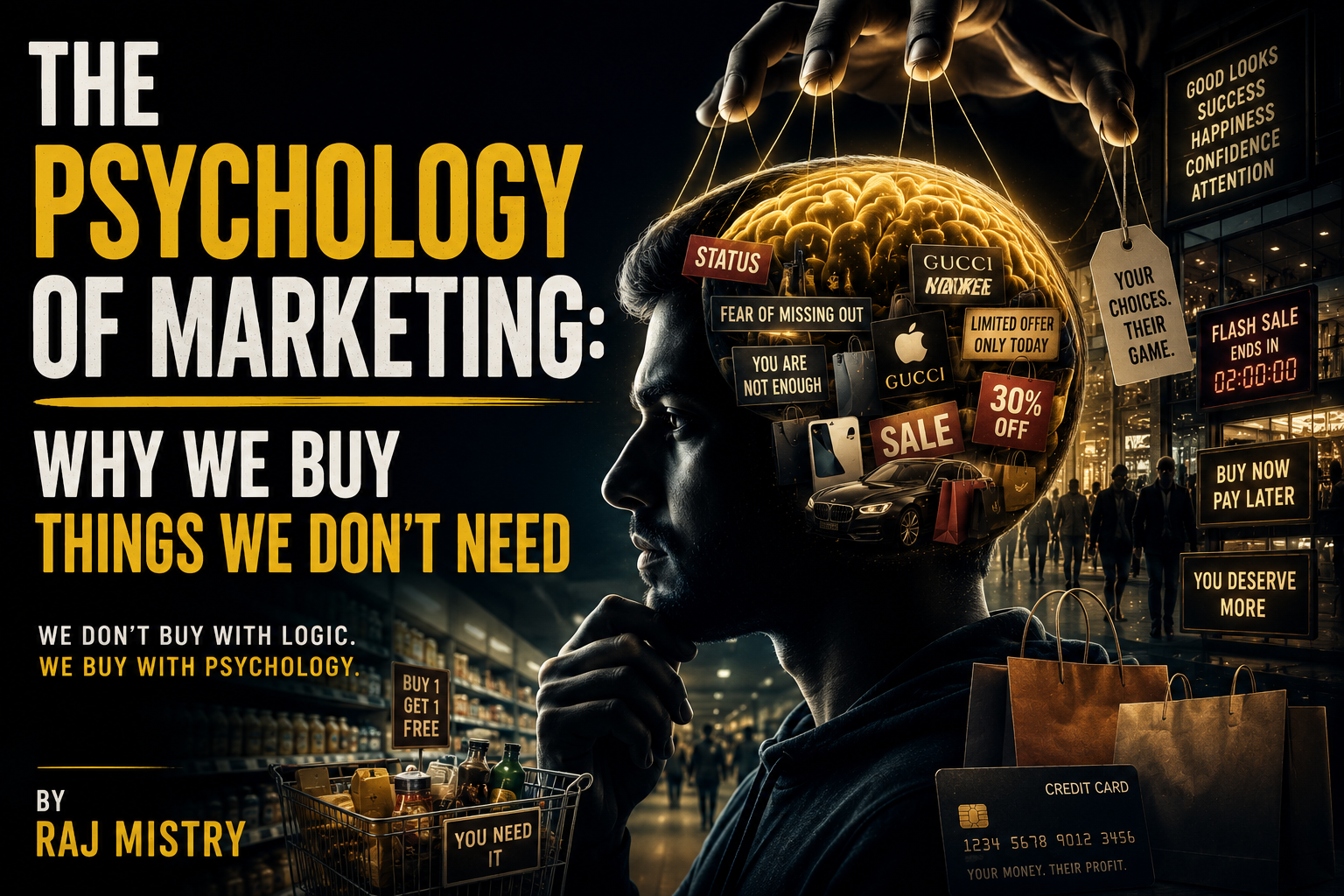
We do not buy with logic alone. We buy with psychology.
Marketing is not built only around products. It is built around people—their fears, desires, insecurities, ambitions, status, ego, and impulses. Companies know that a good product may satisfy a customer, but powerful persuasion is what gets the customer to buy it in the first place. That is why so much effort goes into packaging, pricing, placement, scarcity, branding, and the feeling surrounding a product.
Once you start noticing these techniques, shopping begins to look very different.
Shopping Malls and the Psychology of Placement
Walk into a supermarket and very little is as random as it appears. Essential products are often placed deeper inside the store, forcing you to walk past shelves filled with things you never intended to buy. Small, inexpensive items are placed near checkout counters because waiting gives you time to notice them, and their low price makes the purchase easy to justify.
Product placement also considers who is looking. Items designed to attract children may be placed where children can easily see them, while products aimed at adults are positioned accordingly. Stores are designed to keep you browsing, noticing, and considering. The longer you remain exposed to products, the more opportunities there are for an unplanned purchase.
The important point is not that every shop uses exactly the same layout or that every mall literally has no clocks or windows. The larger principle is that retail environments are deliberately designed to influence attention, movement, and purchasing behaviour. What feels like casual browsing is often happening inside an environment carefully built to encourage spending.
Branding Sells Dreams, Not Just Products
Do people really need designer clothes, luxury watches, or expensive cars? Sometimes they genuinely appreciate the craftsmanship or quality. But often, the product is only part of what they are buying.
A luxury brand does not simply sell fabric, leather, or metal. It may sell status, exclusivity, confidence, recognition, or the feeling of belonging to a particular group. The customer is not always asking, “What does this product do?” They may also be asking, “What does owning this product say about me?”
That is the power of branding. A company can take an ordinary human desire—the desire to feel attractive, successful, respected, or different—and attach that feeling to a product. Once that connection becomes strong enough, people are no longer buying the object alone. They are buying the identity surrounding it.
The same psychology appears in flash sales and limited-time offers. Messages such as “Only two hours left” or “Few pieces remaining” create urgency. The fear of missing an opportunity can make people act before they have enough time to ask the most important question: Did I actually need this?
The Popcorn Trick: When Pricing Changes the Decision
Consider the cinema concession counter. You may have planned to buy a medium popcorn, but then you notice that the large one costs only slightly more. Suddenly, the larger option feels like better value.
You think, “For just a little extra, I get so much more.”
But that is the clever part. The question in your mind has changed. You are no longer deciding whether you need more popcorn. You are comparing the apparent value of one option against another. The larger size begins to feel like the smarter purchase, even though you are still spending more than you originally intended.
This kind of pricing strategy appears everywhere. One option may exist partly to make another look more attractive. A premium package can make the middle option seem reasonable. A smaller version can make the larger one appear like a bargain. The price does not merely tell you what something costs—it can influence how you perceive value.
The Insecurity Industry
Some of the most powerful marketing begins by making people feel that something is missing.
Fitness, beauty, fashion, and lifestyle marketing can sometimes operate in this territory. The message may not directly say, “You are not good enough,” but it can quietly suggest that you would be more attractive, confident, successful, or desirable if you changed something about yourself.
First comes the insecurity.
Then comes the solution.
This does not mean gyms, dietitians, cosmetics, or beauty products are inherently manipulative. Many provide genuine value. The problem begins when marketing deliberately exaggerates insecurity in order to create demand. A person who felt perfectly comfortable yesterday may suddenly discover ten things supposedly wrong with them after watching enough advertisements.
People do not always buy the product because they hate how they look. Sometimes they buy it because they enjoy it. But insecurity remains one of marketing’s most powerful tools because people will often spend heavily to escape the feeling that they are somehow not enough.
When Looking Rich Becomes More Important Than Being Stable
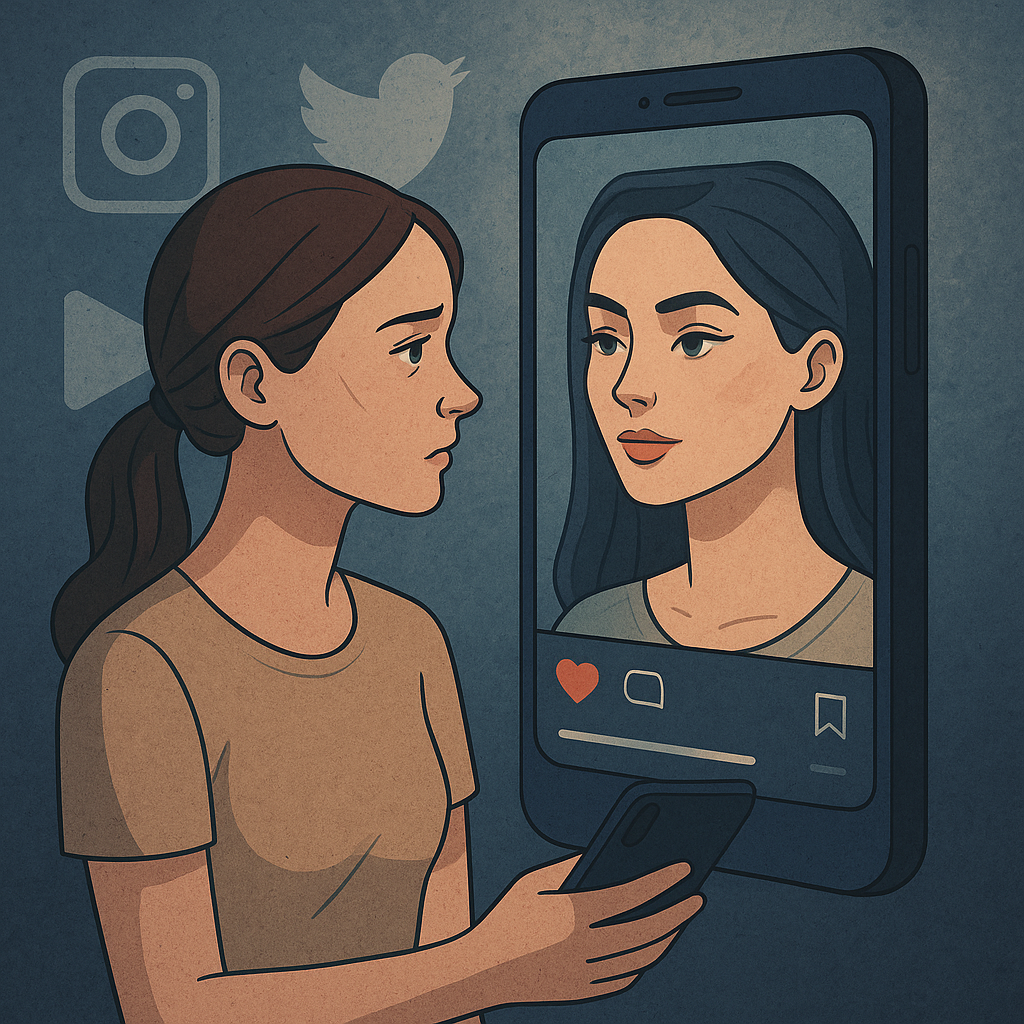
Social media has created another powerful marketplace: the market for appearance.
Expensive brunches, airport check-ins, luxury hotel photographs, designer labels, and carefully staged experiences can become symbols of a life people want others to believe they are living. The experience itself sometimes becomes secondary to the image of the experience.
Marketing understands this desire. It does not simply sell a hotel room; it sells the photograph you can post from the balcony. It does not merely sell a restaurant meal; it sells the social signal attached to being there. It does not always sell luxury itself. Sometimes it sells the appearance of luxury.
This is where consumption becomes dangerous. When looking successful becomes more important than becoming financially stable, people can begin spending money they do not have to impress people who are not paying their bills.
Price Can Change What We Think We Experience
Human perception is not as objective as we like to believe. Expectations can influence experience.
If people are told that one product is expensive and another is cheap, they may approach them with different expectations even before trying them. Premium packaging, an elegant setting, a prestigious brand name, or a high price can make something feel more valuable.
The product may not have changed nearly as much as the story surrounding it.
This is why presentation matters so much. A bottle of water served in a luxury environment can feel different from the same water served in an ordinary glass. Food presented as premium may be judged differently from food presented as cheap. Price becomes more than a number—it becomes a signal that tells the brain what to expect.
Marketing understands that people do not experience products in isolation. We experience the packaging, price, reputation, environment, and expectations surrounding them.
When Marketing Becomes Culture
Some marketing campaigns become so successful that people eventually forget they were marketing campaigns at all.
Diamonds are a famous example of how advertising helped strengthen the cultural association between diamond engagement rings and romantic commitment. Over time, what was heavily promoted as a symbol of love came to feel, in many places, like a natural tradition.
That is marketing at its most powerful.
It does not simply convince you to buy something once. It can influence what society considers normal, desirable, prestigious, or necessary. When enough people accept the story, the marketing disappears into the culture.
Different People Are Sold Different Dreams
Marketing also changes depending on who the customer is.
Mass-market consumers may see social media advertisements, discounts, sales, and affordable products promoted at scale. Middle-income consumers may be targeted with ideas such as premium but affordable, aspirational travel, upgraded lifestyles, and convenient financing. At the wealthiest end of the market, marketing can become more private—personal networks, exclusive events, invitation-only experiences, specialist brokers, and direct relationships.
The method changes because the psychology of the customer changes.
One person may be sold affordability. Another may be sold aspiration. Another may be sold exclusivity. The product changes, the price changes, and the advertising changes—but the underlying question remains the same:
What does this person want to feel?
The Psychology Behind the Purchase
Most purchases are not purely emotional, and they are not purely logical either. We usually combine both. We may compare prices and features rationally while still being influenced by status, fear, convenience, scarcity, identity, or belonging.
That is why the most effective marketing rarely focuses only on the product.
It sells the feeling around the product.
A car can sell freedom. A watch can sell status. A cosmetic can sell confidence. Insurance can sell security. A phone can sell belonging. A luxury brand can sell exclusivity.
The object is physical.
The reason for buying it is often psychological.
Final Thought
Marketing is not simply about what you need. It is also about what someone can persuade you to believe you need.
That does not mean every purchase is manipulation or that every company is trying to deceive you. Marketing can help people discover genuinely useful products. But the more you understand how persuasion works, the easier it becomes to separate your own desires from the desires being created for you.
Before buying something, ask yourself:
Do I want the product—or do I want the feeling I have been told the product will give me?
Because marketing sells far more than objects.
It sells identity, status, security, dreams, insecurities, belonging, and illusions.
The product may be what you take home. The psychology is what got you to buy it.