
By Raj Mistry
Human beings have a strange talent:
We can justify almost anything— as long as it benefits us.
Nothing feels completely right or completely wrong anymore. Most of the time, morality changes depending on comfort, convenience, and perspective. The object itself often stays the same. Only the explanation changes.
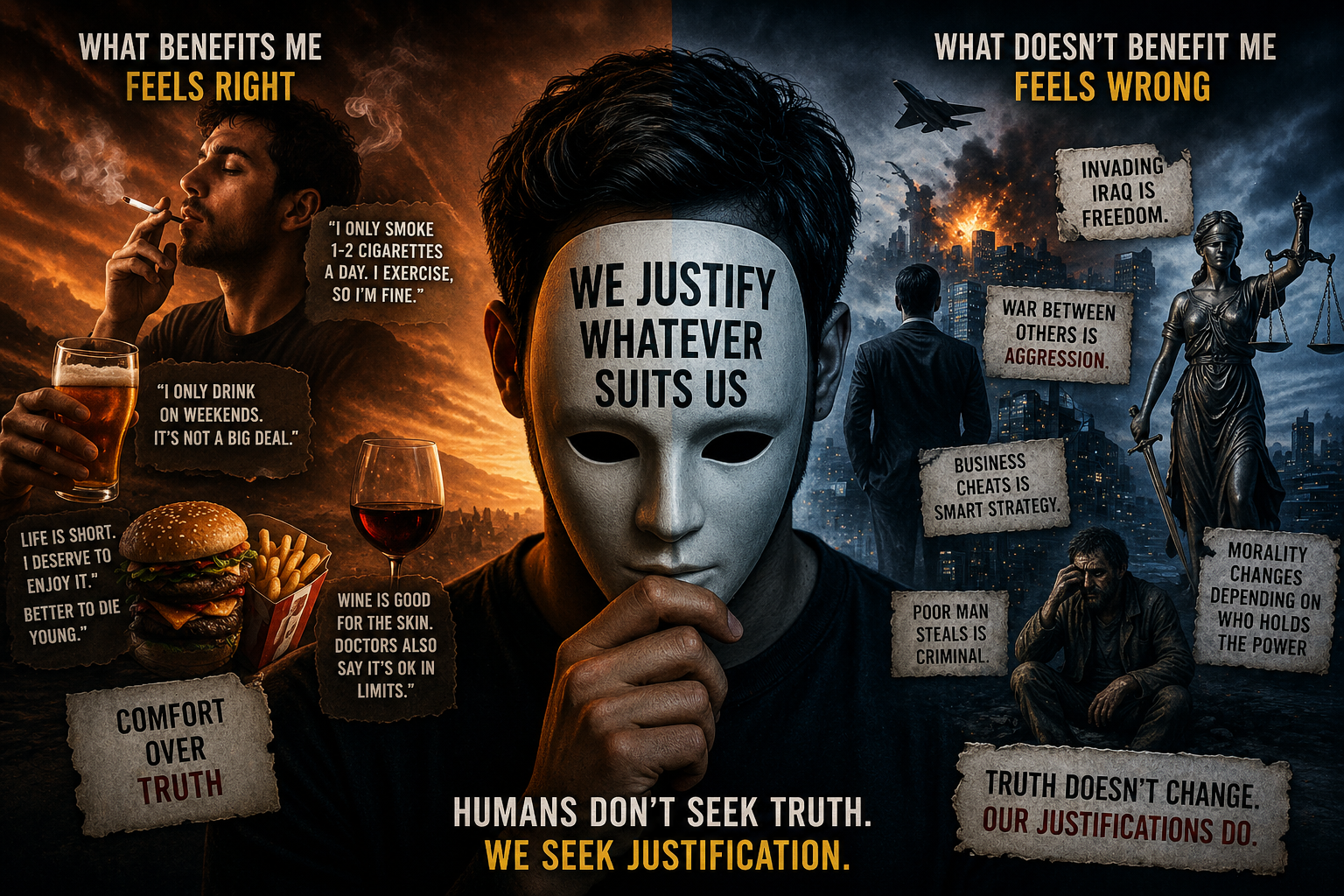
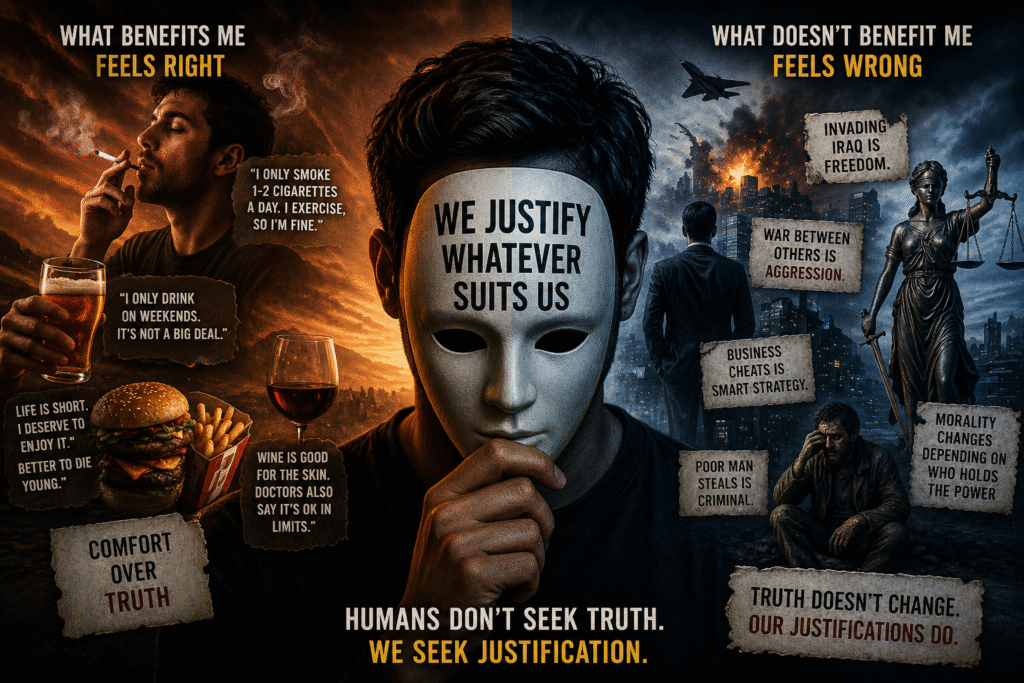
A smoker says: “I smoke only one or two cigarettes a day and I exercise, so it’s not that harmful.”
A drinker replies: “At least I don’t smoke. I drink only on weekends.”
Both know the damage. Both still defend their habit.
Because humans rarely seek truth.
We seek justification.
Comfort First, Logic Later
The moment something becomes part of our lifestyle, we start protecting it mentally.
Someone who once hated alcohol suddenly begins explaining how:
- beer is “good for kidneys”
- wine is “good for the skin”
- one peg a day is “doctor recommended”
Whether the science supports it or not becomes secondary. The goal is no longer honesty.
The goal is comfort.
And once comfort becomes the priority, the mind can justify almost anything.
Even fast food.
Someone will say: “At least I’m enjoying life. Better to die young than suffer in old age.”
That’s not logic.
That’s addiction dressed up as philosophy.
The World Operates the Same Way
This pattern exists everywhere—not just in personal habits.
- When a powerful country invades another nation, it becomes “freedom” or “security.”
- When a weaker nation fights back, it becomes “aggression.”
- When corporations manipulate people, it becomes “business strategy.”
- When a poor man steals food, it becomes “crime.”
The action changes very little.
The justification changes everything.
Morality often depends on who is speaking—and who holds the power.
When Power Renames the Truth
History is full of moments where terrible things were made to sound acceptable.
Cigarette companies once promoted smoking as harmless—even for pregnant women—until science exposed reality.
Entire societies have justified cruelty:
- denying women basic rights in the name of culture
- killing baby girls in the name of tradition
- burning educated women as witches in the name of religion
Millions suffered not because people believed they were evil—
but because evil had been explained well enough to feel normal.
That is what makes justification dangerous.
Not because it hides lies.
But because it makes lies sound reasonable.
The Psychology Behind It
Most people don’t change their beliefs first.
They change their behavior first— and then create beliefs to support it.
We don’t always ask: “Is this right?”
We ask: “How can I make this feel right?”
That’s why two people can look at the same thing and reach completely different conclusions.
The human mind is not as objective as we like to believe.
It is deeply biased toward self-protection.
The Danger of Blind Justification
Give a thief enough power, and he may legalize corruption.
Give a fanatic a microphone, and he may justify violence.
Give an addict enough excuses, and they may never stop destroying themselves.
The problem is not just evil people.
The problem is how easily human beings can make wrong things sound acceptable when it benefits them emotionally, socially, or financially.
Final Thought
We like to believe we are rational, moral, and truthful.
But often, we are simply protecting what feels comfortable.
Humans don’t always follow what is right.
We follow what suits us— and then build arguments around it.
The world does not need more clever justifications.
It needs more people willing to call truth by its real name.